
CHILDREN’S DAY is more than just a celebration—it’s a reminder of our collective responsibility to ensure every child, regardless of their circumstances, has access to the fundamental rights of childhood: safety, education, nutrition, and the freedom to play and dream. While millions of children across India enjoy these privileges, countless others remain hidden behind closed doors, confined to slums, orphaned by tragedy, or denied access to basic education.
This Children’s Day, we bring you five remarkable NGOs led by visionaries who have dedicated their lives to transforming the futures of India’s most vulnerable children. From enabling play for children with disabilities to feeding hungry children in slums, from rescuing orphans of farmer suicides to educating tribal children on remote islands—these organizations are rewriting stories of despair into narratives of hope.
Umoya Foundation: Unlocking the Right to Play
In many homes across India, a disturbing reality persists. Children with disabilities are still being tied to beds, confined behind closed doors, and denied the simple joy of play. Aditya KV, founder of The Umoya Foundation, recognised a truth that society often overlooks: play is not a privilege—it’s a fundamental right.
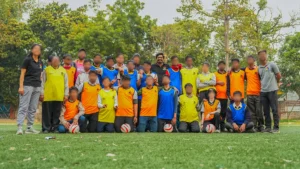
“Play is the first form of learning for children, but unfortunately, it is the first form of exclusion for children with disabilities,” Aditya explains. His question resonates powerfully: “How many of us have actually seen children with disabilities on the playground, playing alongside other children?” The answer is uncomfortable. Playgrounds remain segregated, and children with disabilities are often bullied, excluded, and denied their childhood.
Umoya exists to change this reality by using play and sports as powerful tools to build confidence, friendships, and inclusion. The organisation’s approach is both innovative and adaptive. They constantly invent and modify different sports to suit various disabilities—from football games adapted for children with cerebral palsy to sensory play for children on the autism spectrum. Each child is met exactly where they are.
The impact has been extraordinary. Umoya has already reached close to 75,000 children across India, creating inclusive programs that build cognitive, emotional, and physical skills. The results speak for themselves: children trained by Umoya have won more than 85 medals in various para and special sports tournaments at national, state, and district levels. The organisation is even training disabled athletes for ‘Wheelchair Ultimate,’ with their team set to represent India at the World Wheelchair Ultimate Championship.
But the mission goes beyond medals. Aditya emphasises that when children with disabilities are denied opportunities to play, they miss out on critical skill-building. This leads to gaps in academic knowledge, cognitive and social skills, and ultimately, unemployment in adulthood. Through regular play and interaction, children at Umoya learn to collaborate, communicate, and thrive—skills that prepare them not just for school, but for life.
“With your support, we can continue to provide a complete childhood for every child—because play is not a luxury; it’s a right,” says Aditya. A right to move, to smile, to belong. Every donation helps adapt more games, train more coaches, and reach more children with disabilities across India.
Sant Ishwar Foundation (Ghar): Building Families, Not Just Shelters
“Ghar is a very unique institution. I never conceived it to be an orphanage but a home,” says Colonel Mickie Uberoi, a celebrated army veteran who turned his lifelong dream into a beacon of hope for abandoned and orphaned girl children.
What sets Ghar apart is the philosophy at its core: every child deserves not just shelter, but a family. Run by Sant Ishwar Foundation, Ghar has become a stepping stone for parentless and abandoned girls to dream about a bigger, brighter future—a future they might never have imagined possible.
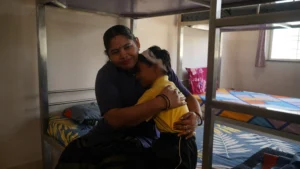
Col Uberoi’s vision extends beyond providing basic care. “We feel our children should go on to become agents of change in society. They should impact and make a difference in the lives of others,” he explains. This belief in the transformative power of education and nurturing drives Ghar’s mission forward.
Step into Ghar today, and you’ll witness dreams taking flight. “Now when you ask our girls, they will all say, ‘I want to become an army officer, I want to become an IAS officer. Someone wants to become a collector, someone says I want to be an air hostess or pilot,'” Col Uberoi shares with visible pride. It’s a testament to the environment of aspiration cultivated within Ghar’s walls.
The journey wasn’t easy. “When I was a 16-and-a-half-year or 17-year-old cadet in the National Defence Academy, even then I would say one day I will start an orphanage,” Col Uberoi recalls. But the dream was accompanied by doubts. “I am only a retired pensioner. Where the money would come from was always a big concern.”
Yet, driven by duty and a desire to make a difference, Col Uberoi embarked on this mission. He reflects on the harsh realities that drive children to Ghar: “It is mostly small children that are abandoned. They are basically found on the roadside. The police find them. The child is begging, loitering, and staying alone.”
In the face of such challenges, Ghar remains steadfast in providing love, care, and opportunity to every child who walks through its doors. Your support can help this army veteran’s dream continue transforming countless lives, rewriting narratives of abandonment into stories of hope, love, and limitless possibility.
Voice of Slums: Feeding Hope, One Meal at a Time
Dev Pratap and Chandni know hunger intimately. They grew up in slums, picking rags and doing odd jobs to survive. There were days when they didn’t know where the next meal would come from. But even in their darkest moments, they chose compassion over despair. With the few rupees they could save, they started feeding children.
What began as a small gesture has blossomed into a full-fledged mission. Today, Voice of Slums feeds over 800 children every single day—365 days a year. Dev and Chandni worked as waiters in restaurants and took on every possible job to keep their effort alive. They’ve assembled everything from large utensils to a delivery van for distribution. The only challenge they face now is arranging rations in such large quantities each day.
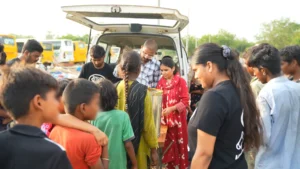
“These children call me didi. When they see a plate full of food, they feel didi is there. She’ll make sure we get a good meal. I can see hope in their eyes,” Chandni says with emotion. In slums, food is not just nourishment—it’s hope itself. When the Voice of Slums van arrives, children come running with joy, plates in hand.
These are children who have no one to care for them. Many have lost their parents. Others are neglected and forgotten by society. For them, Dev, Chandni, and their team represent family—their only source of warmth, nutrition, and safety.
Feeding 800 children isn’t easy. It requires dedication, organisation, and above all, resources. “We have a full team, an equipped kitchen, and a van for delivery. All we need is rations,” they explain. The meals aren’t just filling—they’re packed with nutrition, designed to help growing children regain strength, energy, and the will to dream again.
“At times, I have sleepless nights just thinking how these kids might be surviving. For those who don’t have parents, they are completely dependent upon us. Where will they go?” Dev shares. Chandni adds, “I can’t allow a child to sleep hungry. I can’t see a child unable to even play just because of hunger.”
Voice of Slums doesn’t rely on big grants or government aid. It’s built on the resilience of two young leaders who turned their pain into purpose. Your donation will provide hot meals to children who have nowhere else to turn, ensuring no child sleeps hungry.
Ayang Trust (The Hummingbird School): Education as a Beacon of Hope
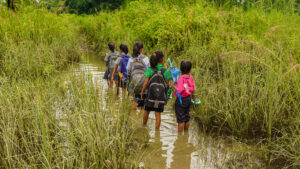
“The Hummingbird School is my only hope to succeed in life. I feel I am trying to swim out of this place and my school stands as a beacon on the other side of the river. If my school closes down, I feel I will drown,” says Roopjyoti, a student at The Hummingbird School on Majuli Island.
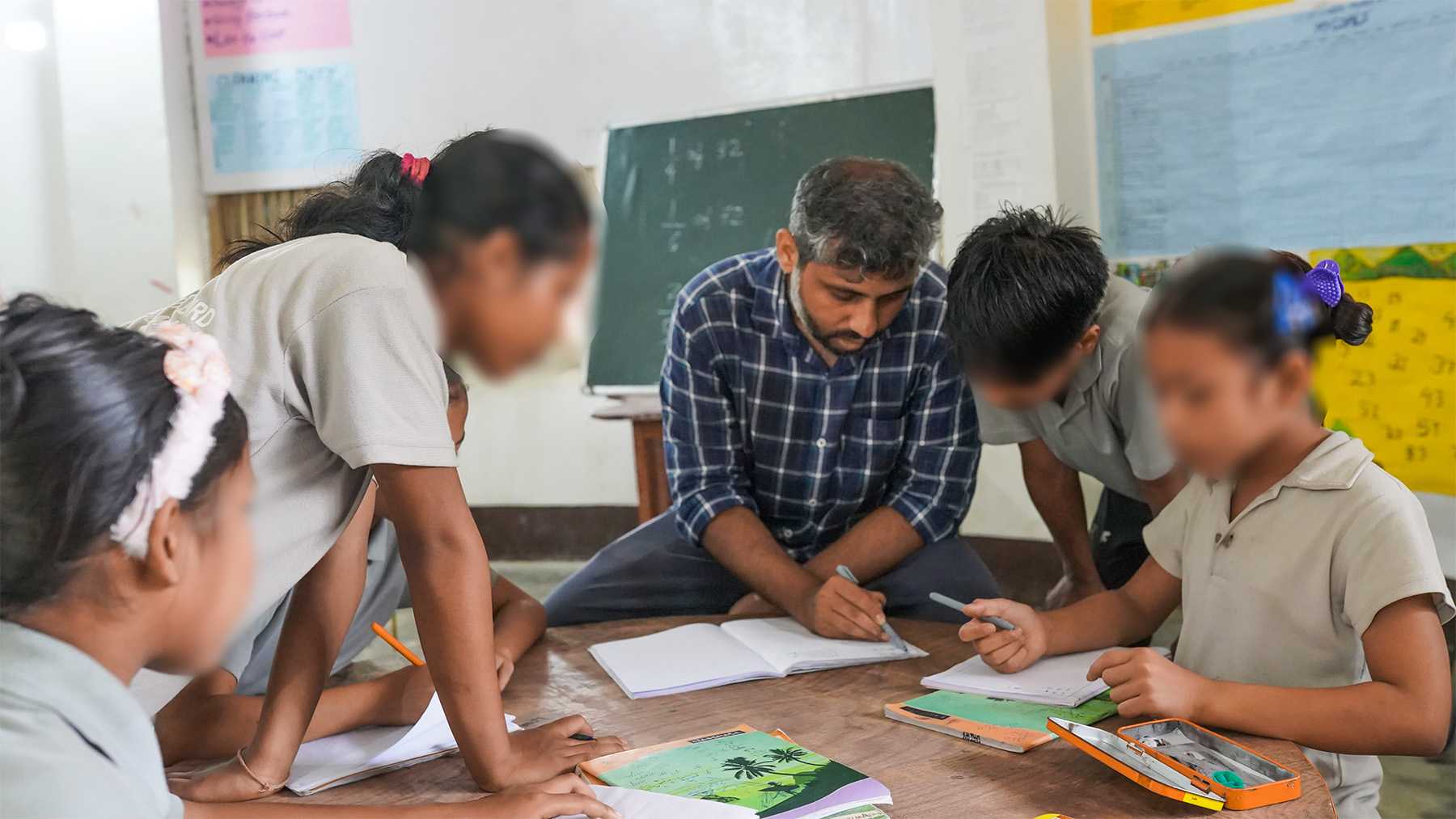
Majuli Island in Assam faces severe floods and constant riverbank erosion, leaving most residents struggling to survive. For the children of this impoverished tribal community, education remains their only path to hope and dignity. This is where Bipin Dhane’s remarkable journey intersects with their desperate need.
Bipin grew up in the small town of Satara in Maharashtra, facing countless financial hardships himself. Despite his struggles, he secured admission to the prestigious IIT Kharagpur and eventually took up a lucrative job in Singapore. But Bipin never forgot his roots or his belief in the transformative power of education.
“When I first visited the remote villages of Majuli I was shocked. The extent of the struggles here was beyond my imagination. These villages had no connectivity to the outside world, and very limited access to healthcare and quality education,” Bipin recalls.
In 2016, Bipin made a life-altering decision. He left his comfortable career abroad and moved to Majuli to provide children from this inaccessible river island the education they were deprived of.
“Whatever little money I had saved, I gave it to my parents. I had no money to start the school. It was then that villagers came together to build bamboo huts. Each family donated bamboo, wood, and whatever little they could. It was the parents of our students who erected huts for the school to start,” Bipin shares about The Hummingbird School’s inception in 2017.
The community’s investment reflected their understanding of what was at stake. “People of the island value education greatly because they know that their children have no future without it. Parents have vested their faith in The Hummingbird School because they don’t want their children to suffer the way they have been,” Bipin explains.
Today, the school has over 300 students, with about 90 children living in the hostel. Many are orphaned or come from single-parent households, struggling each day without adequate care or resources. Your support can help hundreds of children escape the cycle of poverty and build lives of dignity, hope, and opportunity.
Snehwan: Rescuing the Children of India’s Agrarian Crisis
Time stood still for 12-year-old Shrikant when he learned his father, a debt-ridden farmer from Beed, had taken his own life. His village was among the worst hit during the devastating 2015 drought, and his mother, a daily wage labourer, struggled to feed the family of three. The family was penniless, debtors were knocking on the doors, and Shrikant’s future hung in the balance.
Had it not been for Ashok Deshmane and Snehwan, Shrikant would have slipped into the bottomless pit of child labour. Stories like his are becoming increasingly common as farmer suicides continue to devastate rural Maharashtra.
Ashok himself is the son of a farmer who braved his way through abject poverty to educate himself and build a career in IT. During a visit to his village in 2015, he was overwhelmed seeing orphans of farmer suicides starving. He couldn’t remain a spectator. “I just could not remain a mute spectator while children starved in drought-struck villages. I had to do something,” Ashok says. He took 18 children into his care, and Snehwan was born.
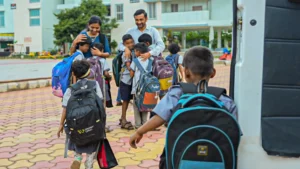
But Ashok’s vision extended beyond immediate relief. “My responsibility is not merely to provide food and shelter to children but to provide them with holistic development. I aspire to raise them as socially aware, skilled, and responsible citizens of the country who can then carry this work forward.”
The Swami Vivekanand Dnyanalay shelter home, situated in a village near Pune, started with 18 children and is now a ray of hope for more than 50 children who call it home. It provides not just food, shelter, and quality education, but something more precious—a family.
However, the crisis is worsening. There has been a steep rise in farmer suicides following COVID-19 and fresh droughts in Maharashtra. The number of children in dire need of support grows almost daily. Snehwan is building its second shelter home to accommodate 200 more children.
“Drought and climate change is worsening and we are in urgent need of funds to extend our efforts and expand the shelter home to bring in 200 more children under our protective wings. We cannot let these kids have a fate similar to their parents,” Ashok and his wife Archana plead.
Make this Children’s Day count
This Children’s Day, you have the power to transform lives. These five organisations—Umoya, Sant Ishwar Foundation, Voice of Slums, Ayang Trust, and Snehwan—are doing extraordinary work across India, reaching children who might otherwise be forgotten by society.
Whether it’s enabling a child with disabilities to experience the joy of play, giving an abandoned girl the confidence to dream of becoming an IAS officer, feeding a hungry child in a slum, providing education on a remote island, or rescuing orphans of farmer suicides—each donation makes a tangible difference.
All donations to these campaigns are tax-exempt under Section 80G of the Income Tax Act, and you can contribute easily through UPI, debit/credit cards, and net banking on give.do, India’s most trusted online donation platform.
This Children’s Day, let’s move beyond celebration to action. Let’s ensure that every child in India—regardless of ability, circumstance, or geography—has the opportunity to experience the fullness of childhood and build a future filled with dignity, hope, and opportunity.
Every child deserves a chance. Your support can make it happen.

Kumara was a professional journalist for over 15 years, with stints in The Telegraph and Reader’s Digest. He grew up hating maths and physics. He is a post-graduate in history. Kumara believes that cricket and Seinfeld have answers to most questions that life throws at you.
Discover more from
Subscribe to get the latest posts sent to your email.