
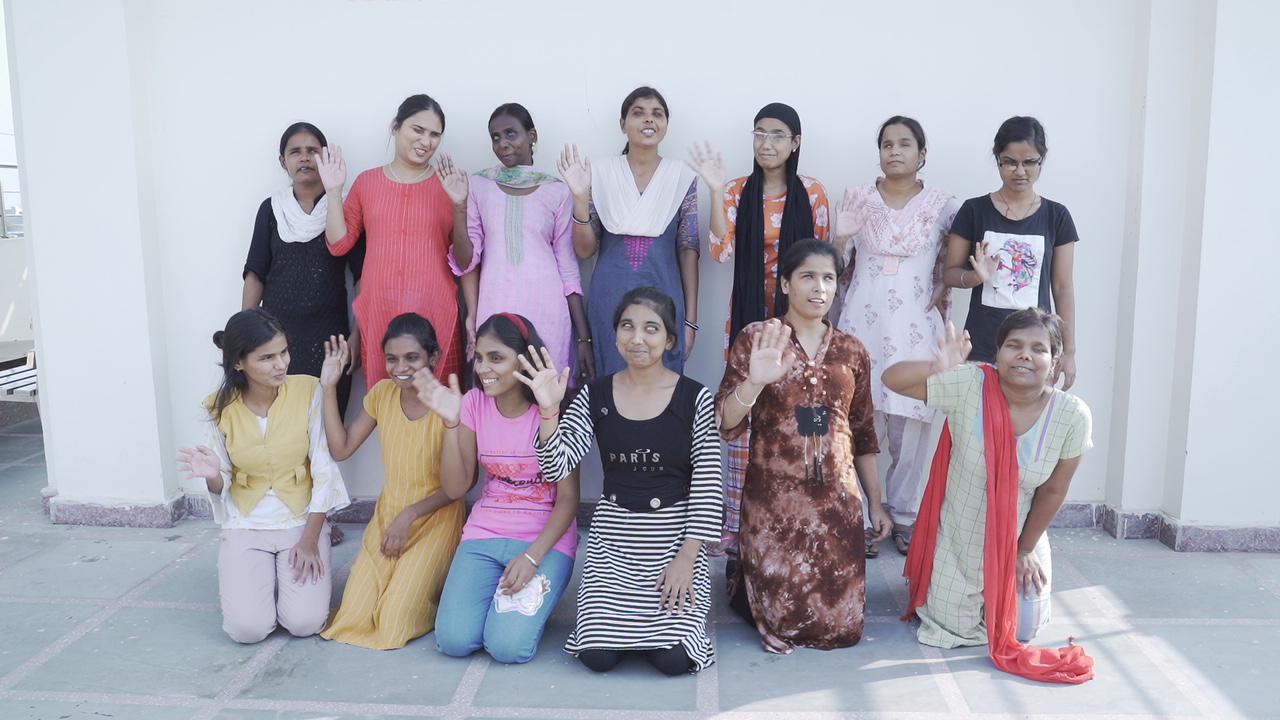
THOSE of us who can read this article can never imagine what it feels like to live life without sight. We can empathise with the blind in India and abroad, but we can never truly know how difficult it could be. Every year, millions of visually impaired individuals face systemic injustice deprived of education, healthcare, and basic human dignity. Even within this deprived community there is further marginalisation for example blind girls especially those born into poverty or rural areas, blind elderly and many more. The obstacles for them can compound into lifelong disadvantages. Deep-seated cultural stigmas often view blindness as a curse, while gender bias magnifies the challenges for blind girls, who may be abandoned, neglected, or denied schooling.
Thankfully, a vibrant network of non-governmental organisations (NGOs) across the country is dedicated to dismantling these barriers. From rural outreach programs that bring mobility training and Braille education to remote villages, to urban shelters offering vocational skills and psychological counseling, these NGOs form a lifeline for the blind in India. This blog profiles six remarkable organisations and the courageous visionaries behind them, whose selfless efforts are transforming despair into empowerment. Through initiatives ranging from specialized schools and residential homes to advocacy campaigns and community workshops, they not only restore independence but also rekindle hope and dignity. Read on to discover how each of these entities is rewriting the narrative of blindness in India.
Bhartiya Netraheen Kalyan Parishad (BNKP) – Ramesh Singh
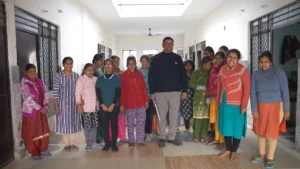
Founded by the indomitable Ramesh Singh, affectionately known as “Singh Sir”, the Bhartiya Netraheen Kalyan Parishad (BNKP) emerged in the early 2000s as the only support for blind girls who face double discrimination: first for their gender, then for their disability. In many communities, a blind girl is perceived as a lifelong financial burden or, worse, a source of shame. Guided by his own experience of losing sight in adolescence, Singh Sir refused to accept this narrative.
BNKP’s flagship programme identifies abandoned or at-risk blind girls and offers them residential care, vocational training in Braille typing and handicrafts, and pathways to mainstream education. Beyond basic support, BNKP organises awareness workshops for parents and local leaders, challenging myths about blindness and advocating for inclusive schooling. Under Singh Sir’s stewardship, hundreds of girls have graduated from BNKP’s residential home and gone on to secure government jobs, pursue higher studies, or launch small businesses in weaving and artisan crafts. His unwavering conviction that every blind girl deserves a chance to shine, continues to galvanize volunteers and donors across India. To support Singh Sir in his mission click the link.
Blind Welfare Society – Dheeraj Bhola & Asha Bhola
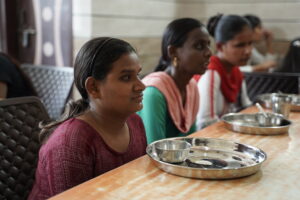
The Blind Welfare Society stands out for its holistic approach to the unique plight of blind in India, especially girls, who are often barred from education and relegated to the margins. The NGO operates a residential shelter specifically for blind girls, providing them with a safe environment, nutritious meals, education, mobility skills, and basic computing. Recognising that self-esteem is as crucial as academic learning, the BWS runs weekly counseling groups, art therapy sessions, and other activities that let the girls build confidence and forge friendships.
Run by Asha and Dheeraj Bhola, both visually impaired since childhood, epitomize resilience and compassion. Their hands-on leadership and empathy have inspired younger volunteers nationwide, proving that lived experience is a powerful catalyst for social change. Blind Welfare Society works to eliminate the stigma surrounding female blindness. Through these multifaceted efforts, BWS has empowered dozens of blind girls to reclaim agency over their lives and envision futures brimming with opportunity. Stand with this selfless couple, show your support here.
Shree Navchetan Andhjan Mandal (SNAM) – Laljibhai Prajapati
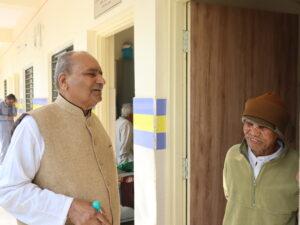
Life for blind elderly can be worse than a nightmare with families often abandoning them owing to the added responsibility of care. Relatives consider them unproductive or burdensome. Recognising this urgent crisis, Laljibhai Prajapati, though blind himself, launched Shree Navchetan Andhjan Mandal (SNAM). SNAM’s home provides a loving, communal residence for elderly blind men and women, offering them nutritious meals, healthcare, mobility aids, and recreational activities. Residents learn practical skills such as basket weaving, herbal remedy preparation, and storytelling for local radio, activities that foster a sense of purpose.
Laljibhai also set up a mobile outreach team that conducts home visits, identifying blind seniors at risk of neglect, and transporting them to SNAM facilities. SNAM has restored dignity and companionship to hundreds of elderly blind Indians. Donate here.
Divya Jyothi Charitable Trust – M. A. Shivaprakash
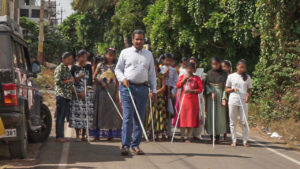
Growing up as a blind child in rural Karnataka, M. A. Shivaprakash fought not just his condition and poverty but an acute shortages of Braille textbooks, mobility training, and specialised educators. Determined that no child should endure the isolation he experienced, Shivaprakash established the Divya Jyoti Charitable Trust. Operating primarily in underserved districts, the Trust’s “Rural Vision Initiative” deploys satellite learning centers stocked with Braille printers, audio-learning devices, and tactile teaching aids. Local volunteers—many of them parents of blind children—receive training to facilitate these centers, ensuring that each child gains foundational literacy and numeracy skills.
Shivaprakash’s personal narrative shared in village assemblies and district workshops has brought rural communities to welcome blind children into classrooms. To date, the Trust’s rural centers have impacted over 2,000 lives, bridging the urban-rural divide in specialised education. Your support can go a long way, donate here.
National Association for the Blind (NAB), Delhi
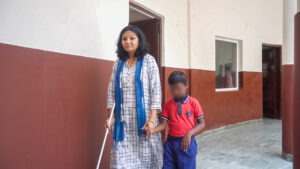
As one of the oldest and most comprehensive networks for the visually impaired in India, the National Association for the Blind (NAB) has been a pioneer since its inception in 1952. NAB Delhi operates a special school that enrolls blind children from ages 4 to 16, offering a full curriculum in Braille, orientation & mobility training, and computer literacy. A residential shelter on campus ensures that outstation students receive nutritious meals, medical care, and psychosocial counseling. Outside the classroom, NAB Delhi runs vocational workshops where teens learn skills such as screen reader operation, radio jockeying, and handicraft production preparing them for mainstream employment or entrepreneurship.
The Chapter’s dedicated “Dream Builders” mentorship program pairs each student with a trained volunteer who provides academic tutoring and career guidance. In parallel, NAB Delhi engages in public advocacy, collaborating with municipal authorities to install tactile walkways and talking traffic signals across the capital. Through decades of relentless service and policy engagement, NAB Delhi remains at the forefront of driving systemic change. You, too, can ensure that every blind child can aspire to and achieve a life without limits. Support here.
—-
Give.do‘s mission is to “make giving bigger and better”. We are the most trusted giving platform in India. Through our technology solutions and services, we enable individuals and organizations to raise funds for, and donate to any cause they care about, with trust and convenience. Our community of 2.7M+ individual donors and 300+ organizations supports 3,000+ verified nonprofits, serving 15M+ people across the country.
Choosing to tread the proverbial road less travelled, Ramon embarked upon a career in journalism and spent over 8 years working for various media organisations. A deeper calling to create a sustainable impact in the lives of the less fortunate compelled him to join the social sector. Ramon is a minimalist at heart and an explorer in spirit.