
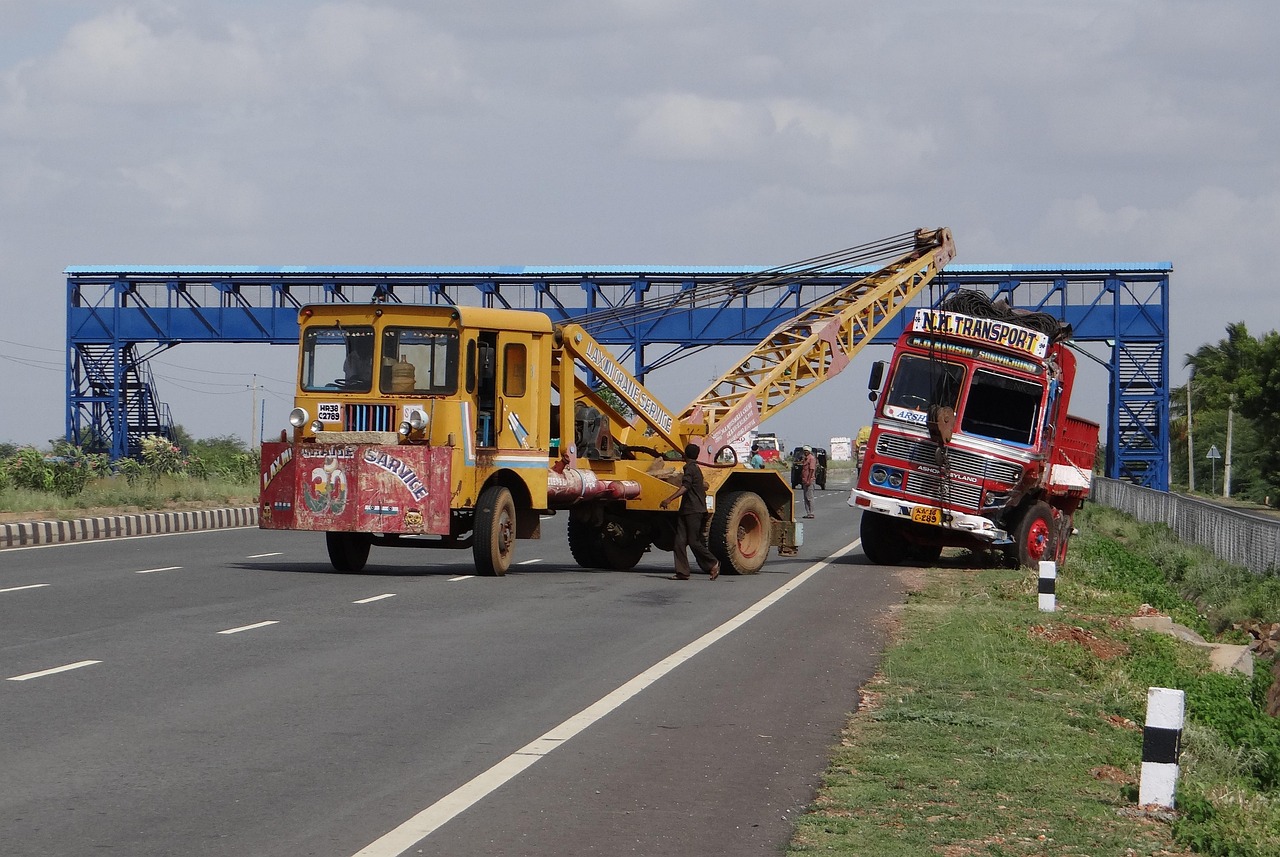
EVERY year on the third Sunday of November, the world observes the World Day of Remembrance for Road Traffic Victims—a solemn day to honour those who have lost their lives or been seriously injured on our roads, and to acknowledge the suffering of their families and communities. This year, as we mark this important observance, the statistics from India paint a particularly urgent picture.
According to WHO’s Global Status Report on Road Safety, 1.35 million people die annually in road traffic crashes worldwide. More alarmingly, road traffic injuries are now the leading killer of people aged 5-29 years. This isn’t just a statistic—it represents lost talents, unrealized potential, and futures cut tragically short.
The burden falls disproportionately on vulnerable road users: pedestrians, cyclists, and motorcyclists account for more than half of all road traffic deaths globally. In developing countries like India, this proportion is even higher.
Status in India: A crisis hidden in plain sight
The Road Safety in India Status Report 2023 by the Transportation Research & Injury Prevention Centre (TRIPC) at the Indian Institute of Technology, Delhi, authored by Professors Geetam Tiwari, Rahul Goel, and Kavi Bhalla, reveals alarming statistics that demand immediate attention.
According to official statistics, 153,972 people were killed in road crashes in India in 2021 (11.3 deaths per 100,000 population). However, the reality is far grimmer—independent studies suggest actual deaths may be 40-82% higher due to systematic underreporting. This means the true death toll could be between 215,000 to 280,000 annually.
Males constitute 86% of fatalities, with women’s share among the lowest globally at just 14%—likely due to lower exposure to traffic, limited vehicle ownership (women hold only 6% of driver’s licenses), and lower participation in formal employment.
The data quality crisis
One of the most concerning findings from the TRIPC report is the severe problems with official data. Police records significantly underestimate non-fatal injuries by a factor of 5 for hospitalizations and 20 for all injuries. This means while official statistics report 371,884 injuries in 2021, the actual number requiring hospital visits may be 2-3 million annually.
Road user classifications in government reports are fundamentally erroneous. Official data shows only 19% pedestrian deaths, but independent research from IIT Delhi estimates 35% of all road deaths are pedestrians—nearly double the official figure. If the pedestrian numbers are wrong, then the proportions for all other road users are also incorrect, rendering official breakdowns unreliable for policymaking.
Rising vehicle ownership without safety
Motorcycle and car ownership doubled between 2008-2017. By 2017, 45% of Indian households owned motorcycles and 7% owned cars. Over this period, approximately 10 million motorcycles and 1.5 million cars were registered annually—equivalent to 4% of households acquiring a motorcycle and 0.6% acquiring a car every year.
However, official registration data overestimates actual vehicles on roads by 40-50%, as scrapped vehicles aren’t removed from records. Vehicle owners pay a lifetime tax at purchase and don’t de-register when vehicles are junked. This data distortion affects all calculations of risk per vehicle.
State-level variations: A tale of two Indias
Death rates vary dramatically across states, revealing a complex picture. Tamil Nadu, Telangana, and Chhattisgarh have the highest rates (17.6-21.9 per 100,000)—more than three times the rates in West Bengal and Bihar (5.9 per 100,000).
More concerning is the trend: death rates increased by more than 20% in Bihar, Tripura, Chhattisgarh, Madhya Pradesh, and Assam between 2015-2021. These states, among India’s poorest, are experiencing rapid motorization without corresponding safety infrastructure. They collectively contribute one in three road deaths nationally, making their rising trends particularly worrying.
Conversely, significant reductions occurred in Puducherry (39%), Nagaland (35%), Chandigarh (29%), and Mizoram (21%), suggesting that effective interventions are possible when properly implemented.
Vulnerable road users at risk
The TRIPC report reveals that vulnerable road users (pedestrians, cyclists, motorcyclists) constitute 68-87% of highway deaths and 78-94% of urban deaths. This is drastically different from high-income countries where car occupants form the majority of victims.
National Highways, comprising just 2% of road length, account for 36% of all fatalities, with a fatality rate of 0.42 deaths per kilometre annually. The relatively high death rate on National Highways should be a cause for serious concern and guide future design considerations.
Trucks and buses are involved in about 70% of fatal crashes in both rural and urban areas. This pattern is very different from Western countries where there are significant differences between rural and urban crash patterns.
Among the 53 cities with populations over 1 million, the five with the highest death rates are Asansol, Ludhiana, Vijayawada, Allahabad, and Jaipur—with average fatality rates of 21 per 100,000, about twice the national average. Cities with the lowest rates include Kolkata (1.56), Greater Mumbai (2.4), Srinagar (2.9), Hyderabad (3.4), and Pune (4.1).
The origins and significance of the World Day of Remembrance for Road Traffic Victims
Established through UN General Assembly resolution 60/5, the World Day of Remembrance for Road Traffic Victims has become a crucial tool in global efforts to reduce road casualties. It serves multiple vital purposes:
It provides a platform to remember all people killed and seriously injured on roads worldwide. It acknowledges the crucial work of emergency services who respond to crashes daily. It draws attention to the often inadequate legal response to culpable road deaths and injuries. It advocates for better support for road traffic victims and their families. It promotes evidence-based actions to prevent future deaths and injuries.
Since its adoption, the observance has spread to a growing number of countries on every continent, becoming an important tool for drawing attention to the scale of emotional and economic devastation caused by road crashes.
The decade of action for road safety 2021-2030
In September 2020, the UN General Assembly adopted resolution A/RES/74/299, proclaiming the Decade of Action for Road Safety 2021-2030, with an ambitious target of preventing at least 50% of road traffic deaths and injuries by 2030. WHO and UN regional commissions have developed a Global Plan to achieve this goal.
However, progress toward the earlier Sustainable Development Goal (SDG) target 3.6—which called for a 50% reduction in road traffic deaths by 2020—remains far from sufficient. India’s own trajectory is particularly concerning. The TRIPC report notes that if past trends continue, fatalities could reach 200,000 by 2030 before beginning to decline.
Lost Talents: The human cost beyond statistics
When the WHO speaks of “lost talents,” it refers to something profound. Every road traffic death represents not just an individual life, but the loss of their potential contributions to society—their ideas, their innovations, their care for others, their future families.
In India, where road traffic crashes rank as the 13th largest contributor to health burden (deaths and disabilities) nationally, and the sixth largest contributor for the working-age population (15-49 years), the impact is staggering. Consider:
A 25-year-old engineer killed on their way to work—decades of innovation lost. A student who never completes their education—potential unrealized. A parent struck while crossing the road—children left without care. An elderly pedestrian—wisdom and experience erased.
Each represents not just a personal tragedy but a loss to families, communities, and the nation’s development. The economic burden is immense, with billions lost annually in healthcare expenses, lost productivity, and premature deaths.
What needs to change: Evidence-based solutions
The TRIPC report, along with international research, points to several critical interventions that must be implemented urgently:
Key Recommendations from the Report:
-
Institutional Reform:
- Establish an independent National Road Safety Agency with sufficient executive power and funding, reporting directly to the main legislative forum or head of government
- The agency should be staffed by professionals with career opportunities similar to those in IITs and CSIR laboratories
- Minimum funding of 1% of total proceeds from cess on diesel and petrol should be allocated to road safety
-
Data System Overhaul:
- Establish a special central department for coding and recording all fatal crash data systematically
- State Crime Record Bureaus should send completed fatal accident case files weekly to a national center
- Data should be anonymised and made publicly available for independent analysis
- Employ 50-100 statistical and epidemiology experts to design surveys and perform analyses
-
For Vulnerable Road Users:
- Reserve adequate space for pedestrians and cyclists on all roads where they are present
- Ban free left turns at signalised junctions to protect crossing pedestrians
- Enforce maximum speed limits of 40-50 km/h on arterial roads and 30 km/h in residential areas through road design and police monitoring
- Increase bicycle conspicuousness with reflectors on all sides and wheels, painting them yellow, white, or orange
-
Mandatory Helmet Enforcement:
- Strict enforcement of motorcycle helmets for riders and passengers—to contain the large burden of deaths due to motorcycle use
- Ensure helmets are of standard quality, correct size, and properly strapped
- Extend enforcement beyond cities and towns to rural roads
-
Infrastructure Improvements:
- Implement traffic calming measures in urban areas and on rural highways passing through towns and villages
- Construct service lanes along all 4-lane highways and expressways for use by low-speed and non-motorized traffic
- Remove raised medians on intercity highways and replace with steel guard rails or wire rope barriers
- Provide frequent and convenient underpasses (at the same level as surrounding land) for pedestrians, bicycles, and other non-motorized transport
- Conduct mandatory road safety audits for all road building and improvement projects
-
Enforcement Priorities:
- Focus primarily on speed control—the most important enforcement issue in India
- Strict enforcement against driving under the influence of alcohol (involved in 30-40% of fatal crashes)
- Countrywide enforcement of seatbelt use laws
- Use automatic speed enforcement for cost-effectiveness
-
Pre-Hospital Care:
- Make modern knowledge regarding pre-hospital care widely available
- Train specialists in trauma care in hospital settings
- Rationalize pre-hospital care programs on evidence-based policies so scarce resources aren’t wasted
-
Research Agenda:
- Development of street designs and traffic-calming measures that suit mixed traffic with high proportions of motorcycles and non-motorised modes
- Highway design with adequate and safe facilities for slow traffic
- Pedestrian impact standards for buses and trucks
- Evaluation of policing techniques to minimise cost and maximise effectiveness
- Traffic calming measures for mixed traffic streams including high proportions of motorised two-wheelers
The international evidence base
The TRIPC report draws on decades of international research to highlight what works and what doesn’t:
What Works:
- Mandatory seatbelt use with strict enforcement can reduce car occupant fatalities by over 50%
- Daytime running lights on motorcycles reduce multi-vehicle crashes by 10-15%
- Traffic calming techniques, roundabouts, and bicycle facilities in urban areas provide significant safety benefits
- Road designs that control speeds are the most effective crash control measure
What Doesn’t Work:
- Imposing stricter penalties (higher fines or longer prison sentences) alone will not significantly affect road-user behavior
- Driver or pedestrian education programs by themselves are usually insufficient to reduce crash rates
- General awareness campaigns without enforcement backing have limited impact
The key factor in enforcement effectiveness is the perceived likelihood of being detected and sanctioned, not the severity of punishment.
As we observe the World Day of Remembrance for Road Traffic Victims, we must move beyond mourning to action. The day isn’t just about looking back—it’s about preventing future tragedies.
The TRIPC report makes clear that India’s road safety crisis is both dire and solvable. The total number of deaths in 2021 was 13.2 times greater than in 1971, with an average annual compound growth rate of 6%. The fatality rate in 2021 was 5.3 times greater than in 1971.
But this trajectory is not inevitable. The report states clearly: “The only way the decline of road traffic fatalities can be brought forward in time is to institute evidence-based India-specific road safety policies that are more effective.”
Countries with similar income levels to India have achieved much lower road traffic death rates. Eight countries with vehicle ownership rates much higher than India have lower fatality rates. This proves that lack of finances does not necessarily mean a society has to accept unsafe roads.
This World Day of Remembrance for Road Traffic Victims, let us commit to:
- Honouring those we’ve lost by working to prevent future deaths through evidence-based policies, not symbolic gestures
- Demanding data transparency so the true scale of the crisis is visible and solutions can be properly designed
- Advocating for vulnerable road users—the pedestrians, cyclists, and motorcyclists who bear the brunt of our unsafe roads
- Supporting institutional reform including the creation of an independent National Road Safety Agency
- Holding authorities accountable for implementing the known solutions that can save tens of thousands of lives annually
- Recognising that road safety is a public health crisis requiring systematic intervention, not just “accident prevention”
Every road death is preventable. Every family that loses a loved one to a road crash is a family that should have been spared that pain. Every young life cut short is a talent lost to the world.
India stands at a critical juncture. Rapid motorisation continues, with vehicle ownership doubling every decade, but safety policies lag dangerously behind. The poorest states are experiencing the fastest increases in road deaths. The data systems that should guide policy are fundamentally broken. Vulnerable road users die in numbers that would be unthinkable in high-income countries.
The next decade will determine whether road deaths continue their upward march toward 200,000 annually, or whether evidence-based interventions can reverse the trend and achieve the UN’s target of 50% reduction by 2030.
The TRIPC report provides a roadmap:
The international evidence shows what works. The institutional mechanisms needed are well-understood. What’s missing is the political will to act.
Because no one should die simply trying to get from one place to another. Because every life lost on the road is one life too many. Because the world cannot afford to lose any more talents to preventable crashes. Because the 153,972 officially recorded deaths in 2021—and the actual 215,000 to 280,000 who likely died—represent families destroyed, communities diminished, and a nation’s potential squandered.
Let this World Day of Remembrance for Road Traffic Victims be not just a day of mourning, but a turning point. The lives we save tomorrow depend on the choices we make today.
The road to safer streets begins with remembering why it matters—and then doing everything in our power to ensure no more families join the tragic ranks of those who have lost loved ones to road crashes.
In memory of the lost. In solidarity with the bereaved. In commitment to action.

Give exists to alleviate poverty by enabling the world to give. Established in 2000, Give, together with its partners, is the largest and most trusted giving platform in India. Give enables individuals and organizations to raise and donate funds conveniently to any cause they care about, with offerings including crowdfunding, corporate giving, cause marketing, and philanthropy consulting. Give’s community of 2.6M+ donors supports 3,000+ verified nonprofits, serving 15M+ people across the country.