
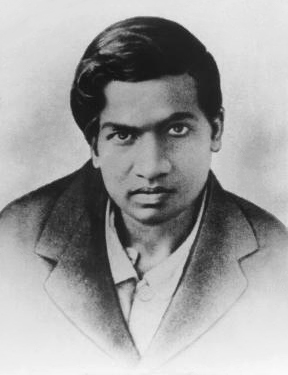
EVERY year, on December 22, India pauses to celebrate one of the greatest minds the world has ever seen—Srinivasa Ramanujan Iyengar. The day, celebrated as Mathematics Day, honours his remarkable contributions and reminds us how far imagination and persistence can take a human soul. On Mathematics Day, we remember how his discoveries continue to influence mathematics, physics, and computer science worldwide.
Ramanujan was born on 22 December 1887 in Erode, Tamil Nadu. Raised in a modest Brahmin household, he grew up surrounded by cultural traditions and hardship. His mother affectionately called him Chinnaswami—Little Lord—but the world would soon know him by another name: Ramanujan.
When we mark Mathematics Day, we often picture gifted children excelling in school. Yet Ramanujan’s childhood looked very different. He barely spoke until the age of three, worrying the family. His grandfather taught him the Tamil alphabet, a step that opened doors to a lifetime of learning.
Ramanujan joined Kangayan Primary School in Kumbakonam, where his brilliance began to show. He passed his primary school exams in 1897, standing first in his district. Later, he joined Town High School in 1898 and won the prestigious K. Ranganatha Rao prize for mathematics in 1904.
Struggles with Conventional Education
Ramanujan’s relationship with formal education was complicated. Though he excelled in mathematics, he struggled in other subjects. After joining Government College in Kumbakonam, he lost his scholarship because he failed English and other courses.
His story is a powerful reminder on Mathematics Day that academic brilliance doesn’t always fit neatly into exam results. Many future innovators today may feel out of place in conventional classrooms, much like Ramanujan once did.
He left his home in 1905 and went to Madras, where he enrolled in Pachaiyappa College on a scholarship. But again, he failed several subjects and left without a degree.
Ramanujan’s persistence
Despite setbacks, Ramanujan never gave up mathematics. Armed with notebooks overflowing with equations and original formulas, he approached the Indian Mathematical Society in 1910 seeking help. Ramachandra Rao, a respected mathematician, noticed his genius and arranged a scholarship of ₹25 per month.
This period marks a turning point we honour on Mathematics Day: a moment when a struggling student became a rising star in Indian mathematics. His first paper appeared in the Journal of the Indian Mathematical Society in 1911.
The Cambridge connection
Another reason Mathematics Day holds significance is because it reflects Ramanujan’s global contribution. In 1913, after encouragement from colleagues, he wrote to Professor G.H. Hardy at Cambridge University, sharing his theorems and ideas. Hardy immediately recognised his extraordinary originality and invited him to England.

His family initially resisted the idea of him travelling abroad, but they later agreed. On 17 March 1914, Ramanujan boarded a ship to England—an event that forever altered the history of mathematics.
Ramanujan flourished at Cambridge. He worked alongside Hardy and Littlewood, producing groundbreaking research in:
- Partition theory
- Prime numbers
- Continued fractions
- Modular forms
He earned a B.A. “by research,” was elected to the London Mathematical Society, and his fame spread across Europe. Even today, researchers celebrate Mathematics Day with seminars and workshops based on Ramanujan’s theories.
However, life in England was not easy. A strict vegetarian, Ramanujan cooked his own meals and often did not eat enough. Combined with the cold weather and intense work, his health deteriorated.
In 1917, he was hospitalised with a suspected case of tuberculosis. Despite his illness, he continued to produce significant work.
Return to India
Ramanujan returned to India on 29 March 1919, hopeful that he would recover and take up professorships being offered to him. Sadly, this was not to be. His condition worsened rapidly, and he passed away on 26 April 1920 at the age of just 32.
Although Ramanujan lived only 32 years, his influence continues to grow. His notebooks contained thousands of results—many without proofs—that kept mathematicians busy for decades. Some of his ideas were proven only in recent decades, showing how far ahead of his time he was.

This is why Mathematics Day is so powerful: it reminds us that genius does not need a long life to leave a deep mark.
The Government of India declared 22 December as Mathematics Day to honour Ramanujan’s birth anniversary and inspire a spirit of mathematical curiosity among students. This day tells young people that:
- Even if they fail exams, they can still succeed in real life
- Talent may come from unexpected places
- Passion can overcome poverty and hardship
Mathematics Day encourages educational institutions to organise workshops, competitions, and exhibitions that highlight Ramanujan’s contributions and ignite interest in mathematics.
Ramanujan’s Philosophy
Ramanujan once said, “An equation has no meaning to me unless it expresses a thought of God.” His work was not mechanical—it was intuitive, spiritual, and emotional. His approach still fascinates thinkers across the world.
As we celebrate Mathematics Day, we honour a man who reshaped the world of numbers. From modest beginnings to international acclaim, Srinivasa Ramanujan’s journey is a story of passion and perseverance.
Ramanujan lives on in every classroom that celebrates Mathematics Day, in every child who sees beauty in numbers, and in every mathematician who dreams beyond rules and boundaries.
This Mathematics Day, we celebrate Ramanujan not just as a mathematician, but as a symbol of human potential.

Kumara was a professional journalist for over 15 years, with stints in The Telegraph and Reader’s Digest. He grew up hating maths and physics. He is a post-graduate in history. Kumara believes that cricket and Seinfeld have answers to most questions that life throws at you.