
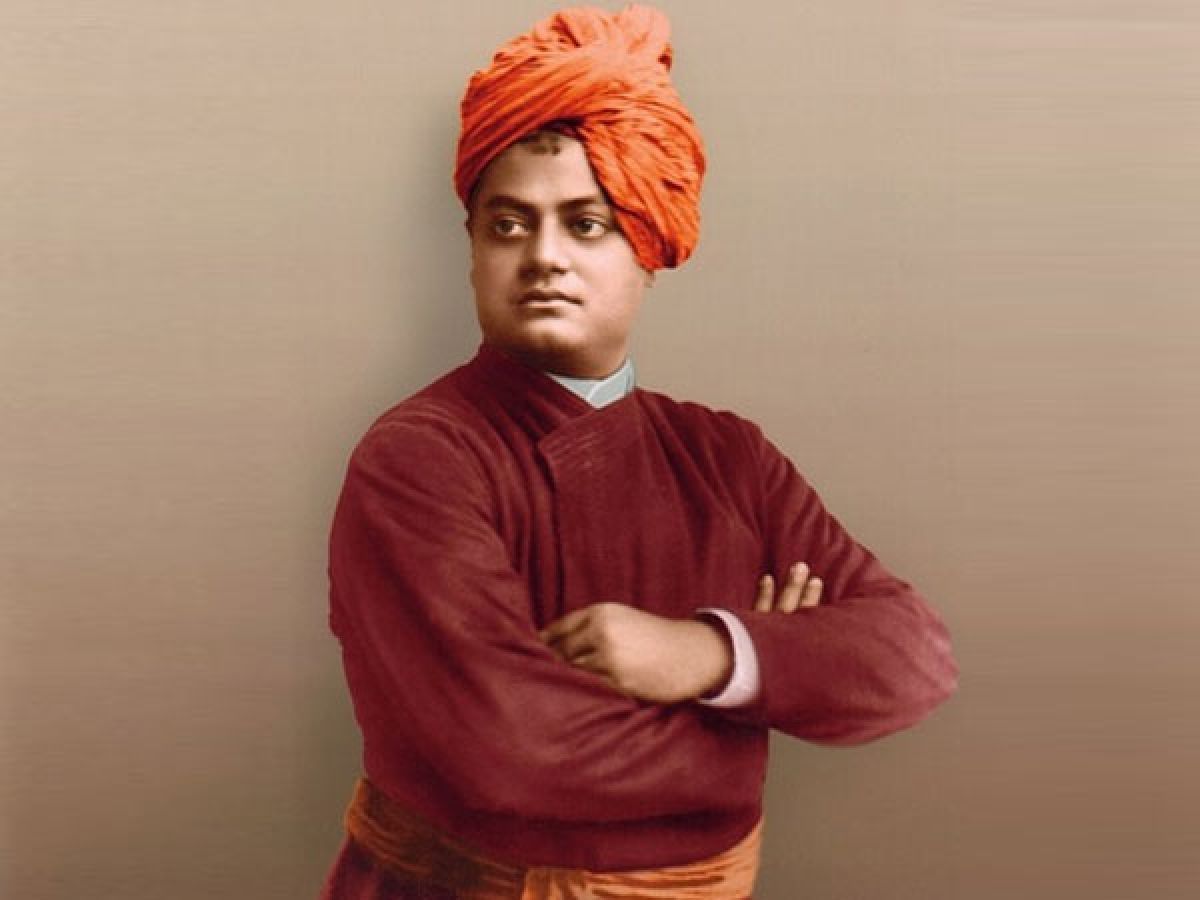
ON 12th January, India celebrates National Youth Day. This day commemorates the birth anniversary of Swami Vivekananda. He was a towering figure who transformed India’s spiritual and social landscape. Born as Narendranath Dutta in 1863 in Kolkata, this extraordinary monk lived merely 39 years. Yet he left an indelible mark on Indian society. His influence continues to inspire millions today.
Swami Vivekananda was not just a spiritual leader. He was a complete social revolutionary. His famous words still resonate among the youth: “Awake, arise, and stop not till the goal is reached.”
National Youth Day honours this message of awakening and action. What made Vivekananda exceptional was his unique ability. He bridged ancient Indian wisdom with modern societal needs. He created a blueprint for comprehensive social transformation.
When young Narendranath met Sri Ramakrishna, his life took a definitive turn. After Ramakrishna’s passing in 1886, Vivekananda undertook extensive travels across India. He plunged like a diver into the ocean of Indian life and culture. These journeys exposed him to the suffering masses. He witnessed the exploitation of the poor. He saw the degradation of Indian society under colonial rule and social orthodoxy. What he witnessed transformed him from a spiritual seeker into a passionate social reformer.
The Battle Against Poverty and Ignorance
Vivekananda’s approach to poverty was revolutionary. He recognised that religion could not exist for empty stomachs. Spirituality without social action was meaningless. Vivekananda shocked people out of their comfort zones. He inspired them to act rather than merely meditate.
His doctrine was clear and uncompromising. “So long as millions live in hunger and ignorance, I hold every man a traitor.” He believed the educated had a moral obligation. They must serve the masses who had indirectly supported their education.
According to Vivekananda, true social reform required multiple elements. Eradication of poverty was essential. Removal of illiteracy was crucial. Restitution of human dignity was necessary. Liberty from fear was fundamental. Knowledge must be available to all, irrespective of class or caste.
On National Youth Day, we remember this comprehensive vision. He envisioned building India through the masses. He called for small groups of energetic patriots. They needed to be brave and strong with “muscles of iron and nerves of steel.”
This was not mere rhetoric but a call to action. It inspired generations of social workers and freedom fighters.
Champion of Women’s Rights
In nineteenth-century India, women’s condition was most distressing. The birth of girls was unwelcome. Their marriage was considered a burden. Their widowhood was deemed inauspicious. Child marriage, widow persecution, and denial of education were rampant social evils.
Vivekananda passionately pleaded for extending all educational facilities to women. He stressed traditional values of family life and chastity. However, he was totally against women’s subjection. He understood that no nation could progress whilst half its population remained oppressed.
His vision of women’s empowerment was comprehensive. It encompassed education, dignity, and social equality. He wrote pointedly about reform priorities. “Remember that the nation lives in the cottages,” he declared.
He noted that reformers were busy with widow remarriage. Vivekananda sympathised with every reform. But he believed the fate of a nation depended upon the condition of the masses. This perspective showed his ability to see beyond superficial reforms. He addressed root causes of social problems.
Revolutionary Educational Vision
National Youth Day celebrates Vivekananda’s educational legacy in particular. His ideas on education were far more modern than those of most educationists of his time. From the beginning, he advocated for mass development and uplift.
He conceived what we now call informal education. This was decades before it became mainstream educational philosophy. He laid special stress on technical education and industrial training. These have now become essential parts of India’s educational system.
His educational curriculum was designed carefully. It would make people mentally and physically strong. It would also make them self-reliant. He believed true education should help individuals realise their full potential. It should develop both character and competence.
Universal mass education was one of his greatest contributions. At a time when education was restricted to privileged individuals, Vivekananda advocated for education for all. This included everyone regardless of caste, class, or gender. He believed education was the key to both individual empowerment and national development.
Breaking the Chains of Caste and Untouchability
Perhaps nowhere was Vivekananda’s revolutionary spirit more evident than in his approach to caste. The caste system had degenerated into a rigid hierarchy based on birth. He showed that caste should be based on individual merit and character, not heredity.
Vivekananda was a staunch critic of untouchability. He found neither religious sanction nor secular logic behind this terrible practise. Vivekananda’s learning from Vedanta made him realise the fundamental equality of all human beings. He went all out to condemn untouchability. He treated the socially marginalised and oppressed with compassion and respect.
His view that “Jiva is Shiva” provided the philosophical foundation. This meant every being is a part of God. It supported his opposition to all forms of discrimination.
Even before Gandhi popularised the concept, Vivekananda reinvented the religious idiom effectively. He spoke of God residing especially in the lowly and the poor (daridranarayan).
Religious Reform with Social Purpose
National Youth Day reminds us of Vivekananda’s secular vision. He gave India its secularist ideas. These now form an integral part of the Constitution. His views on religion were based on common objectives and mutual respect.
Vivekananda propounded that all religions were different paths leading to the same goal. His ideas were based not merely on tolerance. They were based on the mutual realisation of basic truths underlying all religions.
He revolutionised the very concept of monastic life in India. With the establishment of the Ramakrishna Mission, he propounded a new path. Indian monks and ascetics would no longer live isolated lives devoted only to personal salvation.
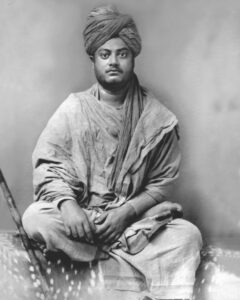
Instead, they would engage in active social service. They established hospitals, educational institutions, and dispensaries. They created orphanages and community institutions for alleviating human misery.
This combination of spiritual practice with social service was Vivekananda’s unique contribution. He gave Indian spirituality a new orientation towards serving society. He transformed the institution of sanyas (renunciation) from individual detachment to committed social engagement.
The Chicago Moment and Global Impact
When Vivekananda reached Chicago in 1893, he was an unknown monk. He was only 30 years old. He came to represent Hinduism at the Parliament of Religions. His opening words, “Sisters and brothers of America,” received a standing ovation.
His address established him as an exponent of India’s age-old values. He became an overnight sensation. This success had profound implications for India’s self-perception.
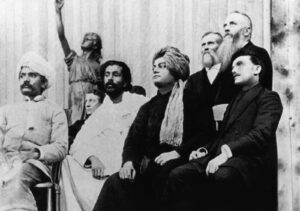
For the first time, Indians realised their heritage commanded respect. It earned admiration in the Western world. Vivekananda’s lectures aimed not just at sharing spiritual wisdom. They also aimed at raising funds to help relieve the suffering and poverty of Indian masses.
His three-year stay in America was filled with intense activity. Swami Vivekananda founded the first Vedanta Society in America. He established permanent centres for yoga workand he was offered chairs in Eastern Philosophy at Harvard and Columbia universities.
His work demonstrated that India’s spiritual traditions had universal relevance. They could contribute meaningfully to global conversations.
A Complete Vision for Modern India
National Youth Day celebrates Vivekananda’s holistic approach to reform. His social reform was comprehensive and integrated. He wanted to combine the best spiritual traditions of India with the latest advancements.
He was not against Western ideas. However, he opposed slavish imitation of Western ways. Swami Vivekananda sought to create a new social order and civilisation. It would be uniquely Indian whilst being modern and progressive.
His approach to reform was distinctive. Unlike many reformers who sought to abolish existing systems, Vivekananda wanted them to grow. Vivekananda was like a doctor who treats the disease without killing the patient. He went to the root of problems rather than merely suppressing symptoms.
This radical reform approach sought fundamental transformation rather than cosmetic changes. He recognised that India’s strength lay in its masses, its villages, its common people.
His socialism, secularism, and emphasis on mass uplift formed the foundation. Treatment of untouchables with compassion was essential. Universal literacy was necessary. Women’s liberation was crucial. Social service as religious worship was fundamental. These constituted the basic pillars of his reform vision.
Legacy for Today’s Youth
On National Youth Day, Vivekananda’s message remains extraordinarily relevant. His emphasis on character building, self-confidence, and service to humanity provides a complete framework. This framework supports both personal and social development.
He taught that true religion consists in self-realisation. It also consists in realising the same divine self in others. His revolutionary doctrine influenced social reformers who followed him.
The dynamism of Mahatma Gandhi was highly inspired by Vivekananda’s teachings. The socialist ideas of Jawaharlal Nehru drew from his vision. Swami Vivekananda has also been a great inspiration for Prime Minister Narendra Modi in his youth and even now.

Today, as we celebrate National Youth Day, we honour not just Vivekananda’s spiritual achievements. We honour his complete vision for social transformation. His life demonstrates that spirituality and social action are not separate paths. They are two aspects of the same journey.
His call to “arise, awake, and stop not till the goal is reached” challenges each generation. It urges us to work tirelessly for the uplift of society.
An inspirational figure
Swami Vivekananda was truly a “condensed India,” as he once described himself. In his short life of 39 years, he produced classics on yoga. He delivered countless lectures. He served as a spiritual guide to numerous seekers.
More importantly, he laid the foundation for modern India’s approach. This included social reform, education, and religious harmony. His greatest contribution was perhaps his ability to inspire self-confidence in Indians.
He showed that India’s poverty and backwardness were not due to any inherent deficiency. They were due to historical circumstances that could be changed. He taught that every individual possessed divine potential. Realising this potential was the key to both personal fulfilment and social transformation.
On this National Youth Day, let us remember Vivekananda not just as a monk or philosopher. Let us remember him as a warrior prophet. He fought against poverty, ignorance, superstition, untouchability, and social injustice.
His life and work continue to light the path for anyone committed to building society. Vivekananda’s vision is of a just, enlightened, and compassionate world. His message to the youth remains clear. Be strong, be confident, serve humanity. Never rest until the goal of a transformed society is achieved.
National Youth Day is more than a commemoration. It is a call to action for every young Indian to embody Vivekananda’s ideals of service and transformation.

Give exists to alleviate poverty by enabling the world to give. Established in 2000, Give, together with its partners, is the largest and most trusted giving platform in India. Give enables individuals and organizations to raise and donate funds conveniently to any cause they care about, with offerings including crowdfunding, corporate giving, cause marketing, and philanthropy consulting. Give’s community of 2.6M+ donors supports 3,000+ verified nonprofits, serving 15M+ people across the country.
Discover more from
Subscribe to get the latest posts sent to your email.