
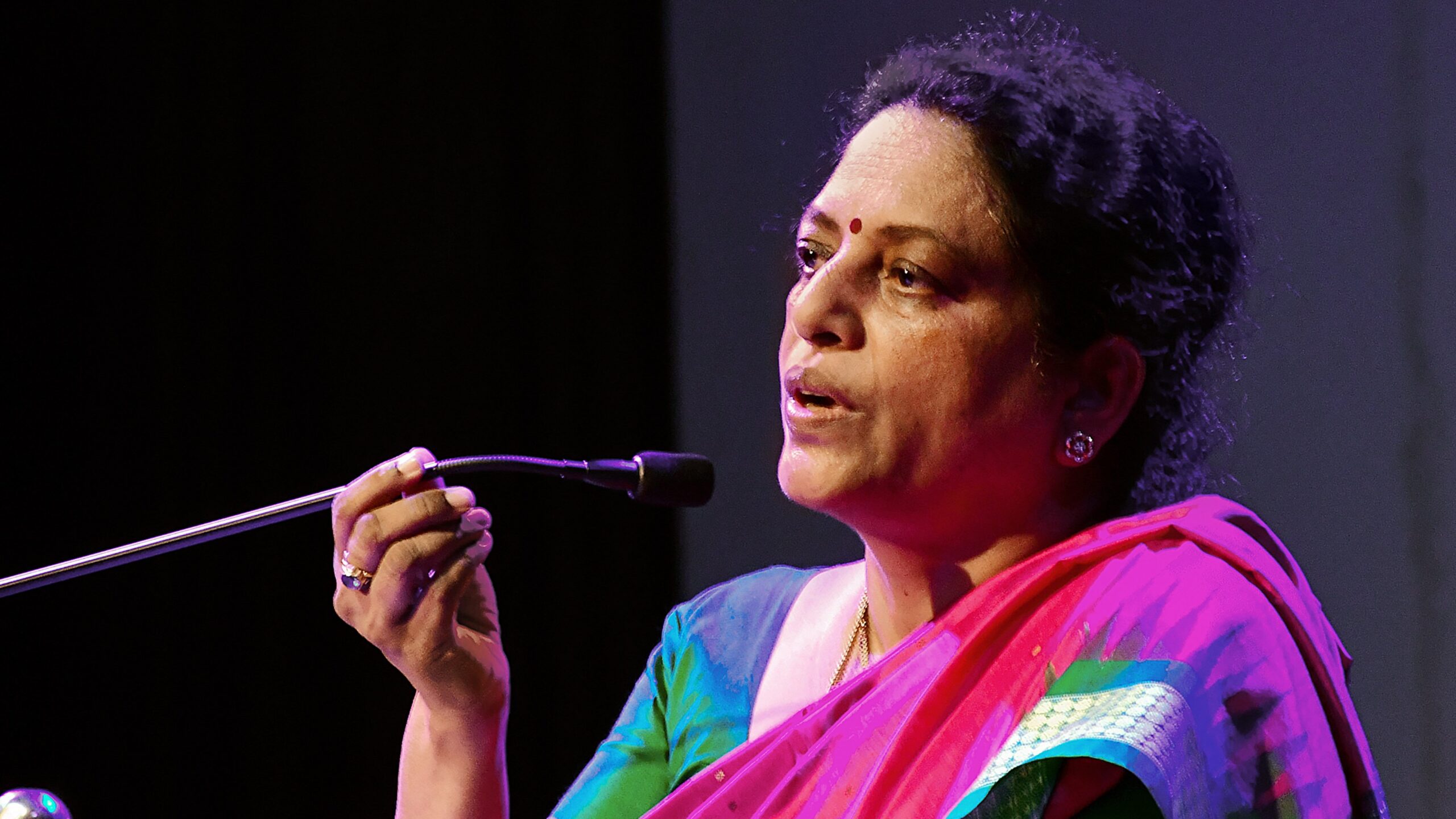
EVERY year on 11 February, the world pauses to celebrate a truth that has taken far too long to be acknowledged: that science is not a man’s domain. The International Day of Women and Girls in Science, proclaimed by the United Nations General Assembly in December 2015, was born out of a simple but urgent recognition—that gender equality in science is not just a matter of fairness, but of necessity. When half the world’s talent is sidelined, the world pays the price. Investing in women and girls in science is not charity—it is the smartest thing humanity can do.
A Brief History of Women and Girls in Science
Women and girls in science have always faced an uphill battle, even when their brilliance was undeniable. In ancient times, Hypatia of Alexandria was a mathematician and astronomer who taught men and advised rulers—only to be murdered by a mob in 415 AD for daring to be brilliant. Centuries later, in the 1800s, women were permitted to attend university lectures but were barred from receiving degrees. Marie Curie, the only person to win Nobel Prizes in two different sciences, was initially denied membership of the French Academy of Sciences. The reason was simple– because she was a woman.
The 20th century saw slow but significant shifts. Rosalind Franklin’s X-ray crystallography work was pivotal to discovering the structure of DNA. But it is alleged that she was overlooked when the Nobel Prize was awarded to Watson and Crick. Katherine Johnson, Dorothy Vaughan, and Mary Jackson—the Black female mathematicians immortalised in the film Hidden Figures—calculated the trajectories that sent men to the moon, only to have their names hidden in plain sight for decades. The story of women and girls in science has, for too long, been a story of brilliance uncredited.
Today, despite progress, women make up less than 30% of the world’s researchers. Barriers—from cultural bias to unequal access to education—persist. The UN’s annual observance of Women and Girls in Science Day is a call to action. To remove those barriers, invest in girls’ scientific education, and ensure that the laboratories, classrooms, and fields of the future reflect the full diversity of humanity.
Five Indian Women Scientists Who Made History
India’s scientific legacy is rich, and women have been at its heart—often quietly, sometimes invisibly, but always indelibly.
Anandibai Joshi (1865–1887) — India’s First Female Doctor
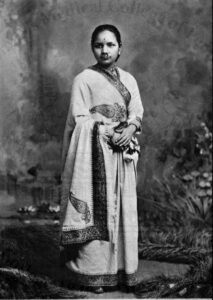
At a time when most Indian women were not permitted to leave the house unaccompanied, Anandibai Joshi sailed to the United States to study medicine at the Woman’s Medical College of Pennsylvania. She graduated in 1886, becoming the first Indian woman to obtain a medical degree—at just 21. Tragically, she died of tuberculosis the following year, but her journey blazed a trail that thousands of Indian women in medicine have walked ever since.
Janaki Ammal (1897–1984) — The Botanist Who Saved India’s Sugarcane
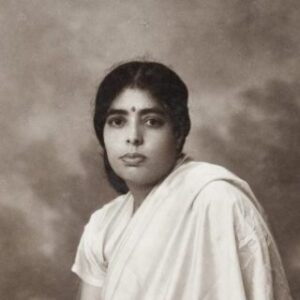
Edavaleth Kakkat Janaki Ammal was a pioneering botanist and cytogeneticist who dedicated her life to plant science. She developed high-yielding, disease-resistant varieties of sugarcane that transformed India’s agriculture. She was also instrumental in protecting India’s indigenous plant species and was among the first to map the chromosomes of sugarcane. In 1977, she was awarded the Padma Shri, and today the National Award for Plant Sciences bears her name—a fitting tribute to a woman who gave so much to the soil of her country.
Asima Chatterjee (1917–2006) — The Chemist Who Fought Disease with Plants
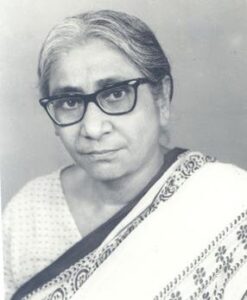
Asima Chatterjee was the first woman to receive a Doctor of Science degree from an Indian university. A chemist of remarkable distinction, she spent decades researching the medicinal properties of Indian plants and developed anti-epileptic and anti-malarial drugs from natural sources. She was elected a Fellow of the Indian National Science Academy and served as the general president of the Indian Science Congress. Her work bridged the ancient traditions of Ayurveda with modern biochemistry, opening new pathways in the treatment of neurological disorders.
Kalpana Chawla (1962–2003) — India’s Daughter Among the Stars
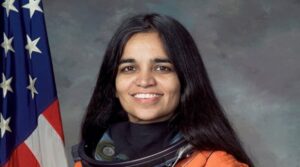
Born in Karnal, Haryana, Kalpana Chawla grew up looking at the sky and decided it was not a limit but a destination. Kalpana became the first woman of Indian origin to travel to space, logging over 376 hours in orbit during her first mission aboard the Space Shuttle Columbia in 1997. She returned to space in 2003, only for the Columbia to disintegrate upon re-entry, taking Kalpana and her six crewmates with it. She remains a symbol of boundless ambition for every girl in India who has ever dared to dream beyond what the eye can see.
Tessy Thomas — India’s Missile Woman
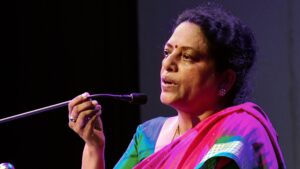
Often called the Missile Woman of India, Tessy Thomas is the first woman in India to head a missile project. As the Project Director for Agni-IV and Agni-V, India’s long-range ballistic missiles, she led one of the country’s most critical defence programmes. And she did it with quiet brilliance and extraordinary technical expertise. She is a recipient of multiple national awards. Tessy broke every stereotype about women in defence science and continues to inspire a generation of girls who aspire to careers in engineering and technology.
The stories of these five women are not just chapters in the history of science. They are powerful arguments for what becomes possible when women and girls in science are given access, opportunity, and belief. Each of them faced resistance and navigated prejudice. And yet, they managed to leave the world fundamentally better than they found it.
On this International Day of Women and Girls in Science, the question is not whether women belong in science. History has answered that. The question is whether we are doing enough. As families, institutions, and societies, we have to ensure that the next Kalpana, the next Tessy, the next Janaki Ammal, is not lost to poverty, bias, or the quiet discouragement that tells a girl her curiosity is not welcome.
She is out there, somewhere. In a classroom in rural Rajasthan, or a slum in Mumbai, or a small town in the Northeast. The future of women and girls in science begins with us. Let’s make sure she gets her chance.

Give exists to alleviate poverty by enabling the world to give. Established in 2000, Give, together with its partners, is the largest and most trusted giving platform in India. Give enables individuals and organizations to raise and donate funds conveniently to any cause they care about, with offerings including crowdfunding, corporate giving, cause marketing, and philanthropy consulting. Give’s community of 2.6M+ donors supports 3,000+ verified nonprofits, serving 15M+ people across the country.