
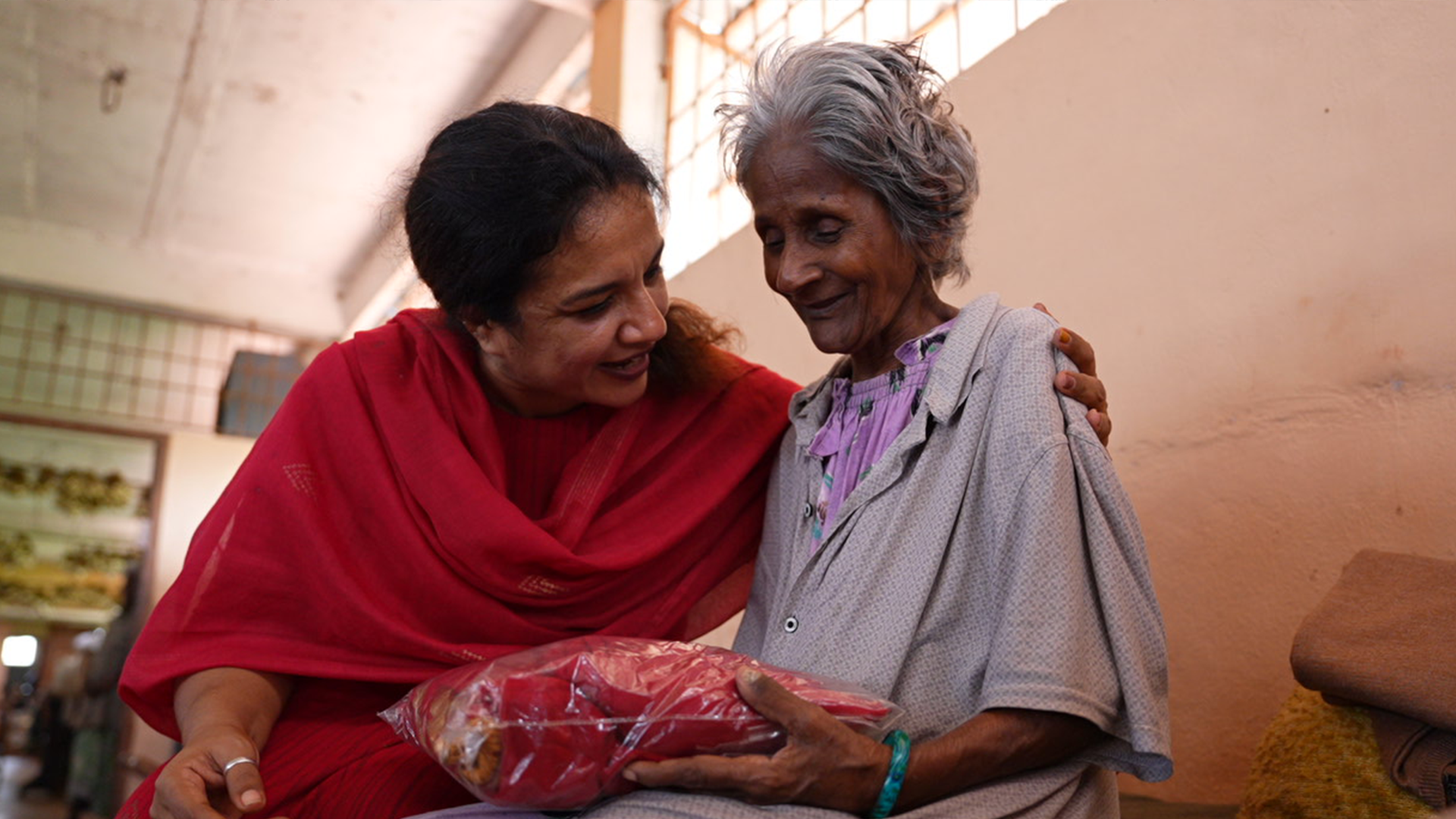
There is a particular kind of person you walk past every day in any Indian city. Sometimes they are sitting on a footpath, talking to someone only they can see. Sometimes they are walking in slow circles outside a temple, barefoot, mumbling. Sometimes they are an old woman near a bus stand, hair matted, sari torn, eyes empty.
Most of us look away. A few drop a coin. But nobody stops.
Mohammed Rafi stopped. And then he kept stopping. And then, one day in 1999, he opened the door of his own home in Chennai and brought them inside.
Twenty five years later, that decision has become Anbagam, a home for around 400 mentally ill and abandoned senior citizens across three centres in Chennai and Thiruvallur. By his own count, he has rescued close to 7,000 people from the streets and reunited around 3,000 of them with their families. This is his story, and theirs. Be a part of this transformational journey here.
A businessman who chose a harder life
Before Anbagam, Rafi was simply a small businessman in Parry’s, the bustling old commercial heart of Chennai. He had a flourishing trade, a family, the ordinary pressures and rewards of any working-class life.
What set him apart was that he refused to look away. He kept noticing the people the rest of the city had decided not to see. The mentally ill destitute, abandoned by families who could no longer cope, abandoned by a system that had no real plan for them, abandoned by a culture that still treats mental illness as shame.
He started small. A meal here, some money there. But he realised quickly that food and pocket change wasn’t really helping. So he set up a public charitable trust called TERDOD, which stands for the Trust for Education and Rehabilitation of Disabled Orphans and Destitutes. Under it, he opened the first Anbagam home, initially housed in his own residence. As the numbers grew, the home moved to Thirunilai village near Red Hills, just outside Chennai. Over the years, two more centres followed, one in Otteri for women and one in Tondiarpet, in partnership with the Chennai Corporation.
The word anbagam means “home of love” in Tamil. It is the kind of word that sounds soft until you understand what it actually takes to build one.
What 400 lives under one roof actually looks like
When Rafi describes the work, he does it the way someone describes running a very large household, which in many ways is exactly what it is. “There are around 400 people in our care. Roughly 250 stay at the Thirunilai home, including a separate isolation ward and a section dedicated to elderly residents. Around 60 women live at the Otteri home. The rest are at Tondiarpet and the upcoming Devandhavakkam facility”, he shares.
According to Rafi, “The medical reality is constant. Most residents arrive in poor health, often after years on the street. Many need ongoing psychiatric medication. Several need eye surgeries, dental work, treatment for diabetes, hypertension, tuberculosis, the long list of illnesses that go untreated when you have nowhere to live. Anbagam covers all of this for free”.
“Then there is food. Rice, dal, oil, vegetables, milk, three times a day, every day, for 400 people. Then clothing. Then bedding. Then the staff who clean, cook, dispense medicine, run physiotherapy sessions, and guide residents through the slow work of rebuilding a daily life”, he further adds.
Rafi is direct about what he needs. He says it without dressing it up. The cost of feeding, medicating and clothing 400 people is enormous, and he is asking for help with exactly that. Not luxury items. Rice, dal, oil, medicines, just the basics of keeping a human being alive and cared for. It is an unromantic ask, and that is precisely why it is honest.
The stories that live inside Anbagam
What makes Anbagam different from a shelter is what happens after the rescue. Rafi treats recovery as a beginning, not an end.
There is a woman called Asha, brought to Anbagam by police. She arrived broken and unwell. After treatment, she recovered fully, then trained as a physiotherapist and now works at the home itself. Her husband refused to take her back. So Anbagam became her family.
There is the young woman the Ponneri police rescued five years ago, who turned out to be pregnant. She gave birth at the home. The child grew up in a Balavihar shelter linked to the trust. The mother, healthy now, packs bags as part of the home’s vocational training programme.
There is Malliga from Manali New Town, whose handicapped husband Balaji died, leaving her with no one. Her own mother could not protect her. She came to Anbagam, recovered, and now teaches bag-making to other residents. Rafi is clear that she does not have a mental health condition any more, and yet she has chosen to stay. For many residents, the home is not a stop on the way somewhere else. It is the somewhere else.
There is the man from Kottayam in Kerala, brought in on a police memo, who refused to speak to anyone for the longest time. He used to sit alone. Now he bathes, eats with the others, helps look after newcomers.
These are not exceptions. They are the pattern. People arrive without names, often without language, often without any idea of who they are. Slowly, with food and medicine and the simple stability of being somewhere safe, they come back to themselves. Some find their families. Some never do, and Anbagam becomes the family.
Twenty five years, and still building
Most NGO stories you read are stories of an idea. Anbagam is a story of an idea that grew into a campus.
The Thirunilai home, built in 2002 with support from Chennai Silks, became the foundation. The Otteri home opened to take in women. The Tondiarpet centre, run in partnership with the Chennai Corporation since May 2013, operates from the Centre for Communicable Diseases. A modern kitchen project funded by the Azim Premji Foundation is currently under construction at Thirunilai.
The next chapter is the most ambitious yet. At Devandhavakkam in Thiruvallur district, Anbagam is building a new home for 300 more residents. The land has been bought. The trust has the plans. What is missing is the funding to finish the construction.
Rafi is matter of fact about it. The current homes can take 400 people. Without the new building, they cannot grow further. With it, they can shelter 300 more of the men and women still walking on Chennai’s streets right now.
What your donation actually does
A donation to Anbagam goes toward the same handful of things, again and again. Rice and dal for the kitchen. Psychiatric medicines for residents. Eye-glasses, hearing aids, mobility supports. Clothes, bedding and salaries for the cooks and care staff who keep the place running. And right now, bricks, cement and steel for the Devandhavakkam home.
You can support Anbagam through their fundraiser on Give.do, where donations are processed securely and the 80G tax certificate is issued automatically.
Choosing to tread the proverbial road less travelled, Ramon embarked upon a career in journalism and spent over 8 years working for various media organisations. A deeper calling to create a sustainable impact in the lives of the less fortunate compelled him to join the social sector. Ramon is a minimalist at heart and an explorer in spirit.
Discover more from
Subscribe to get the latest posts sent to your email.