
MAY 19 marks the inaugural World Fair Play Day. The United Nations proclaimed this date through a resolution on 1 July 2024. Globally, it celebrates sport practised in the spirit of friendship, solidarity, tolerance, and inclusion. Yet, for millions of children with disabilities in India, the playground has always been out of reach.
Fair play is more than a sporting ideal. It teaches mutual respect, bridges cultural divides, and empowers young people to drive social change. Moreover, it directly connects to the UN’s Sustainable Development Goals — specifically SDGs 3, 4, 5, 10, and 16, which cover health, education, gender equality, reduced inequalities, and peace.
The 2030 Agenda for Sustainable Development puts it plainly: sport is an important enabler of sustainable development. Specifically, it promotes tolerance, respect, empowerment of women and young people, and social inclusion. Furthermore, the resolution recognises the role of sport for persons with disabilities in fostering peace, community cohesion, and gender equality.
In short, fair play is not just about what happens on the field. Instead, it shapes what happens in classrooms, homes, and communities for generations.
The Children Nobody Sees
In many homes across India, children with disabilities remain hidden from public life. They are confined indoors, denied play, and excluded from society — not out of malice, but out of ignorance and stigma.
“Children with disabilities are still being tied to beds,” says Aditya KV, founder of Umoya Foundation. “They are still being kept indoors.”
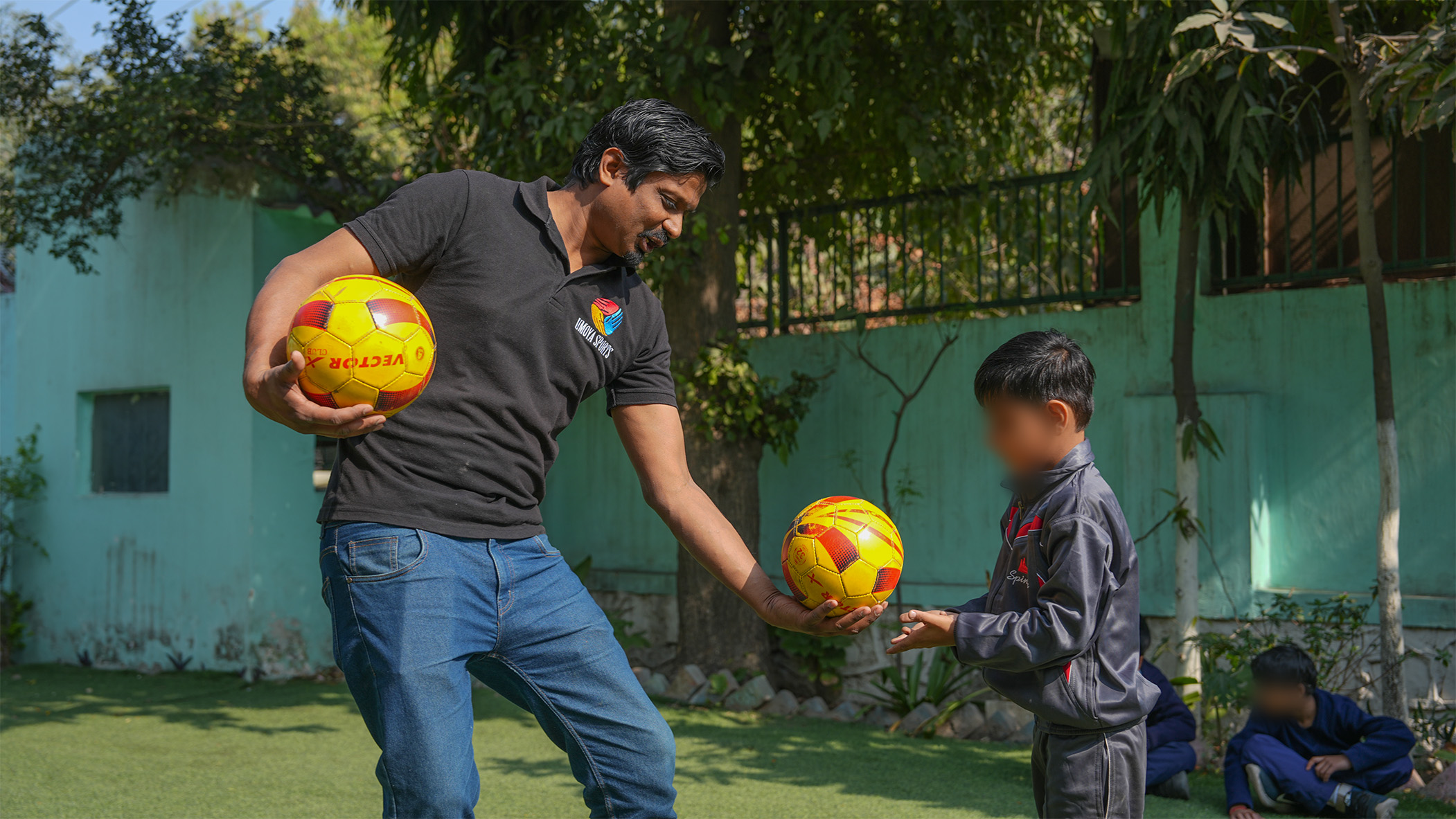
Aditya refuses to accept this as normal. Rather, he sees it for what it is: a violation of rights. Play, he believes, is not a privilege. It is a right. “Play is the first form of learning for children,” he says. “Unfortunately, it is the first form of exclusion for children with disabilities.”
This conviction led Aditya to found Umoya, an organisation dedicated to giving every child a complete, holistic childhood through inclusive sport and play.
Umoya: Where Every Child Belongs
“How many of us have actually seen children with disabilities on the playground, playing alongside other children?” asks Aditya. The answer, for most of us, is rarely — if ever.
Playgrounds across India remain largely segregated. Children with disabilities face bullying and exclusion even when they do step outside. Consequently, they miss not just fun, but the foundational cognitive, social, and emotional skills that play builds.
Umoya exists to change that. Through sport and structured play, the organisation builds confidence, friendships, and a genuine sense of belonging. When children play together, barriers begin to break.
Innovation at the Heart of Inclusion
At Umoya, the team constantly innovates. They adapt and invent games that suit different disabilities — football modified for children with cerebral palsy, sensory play designed for children on the autism spectrum, and much more. Additionally, Umoya trains coaches to meet each child exactly where they are.
Already, the organisation has reached close to 75,000 children across India. These are not token gestures — they are structured, sustained programmes that build real skills and lasting relationships.

The results speak for themselves. Children trained by Umoya have won more than 85 medals in para and special sports tournaments at district, state, and national levels.
Play Builds Futures
The stakes go far beyond childhood. “When children with disabilities are denied opportunities to play, they miss out on critical skill-building,” Aditya explains. “This can lead to a lack of academic knowledge, cognitive and social skills, and later in life, unemployment.”
Through regular play and interaction, children at Umoya learn to collaborate, communicate, and thrive. These are skills that prepare them not just for school, but for life — and for meaningful participation in society.
Therefore, every game is an investment. Every session on the field is a step toward independence, dignity, and opportunity.
How You Can Mark World Fair Play Day
This May 19, the most powerful thing you can do is support those putting fair play into practice every single day. Aditya and the Umoya team are doing exactly that — from Kashmir to Kanyakumari, in rural villages and urban centres alike.
“With your support, we can continue to provide a complete childhood for every child,” says Aditya. “Because play is not a luxury. It’s a right.”
Your donation to Umoya helps adapt more games, train more coaches, and reach more children with disabilities across India. Donations are tax-exempt under Section 80G of the Income Tax Act and can be made easily via UPI, debit/credit card, or net banking.
This World Fair Play Day, choose inclusion. Support Umoya — and help every child claim their right to play.

Give exists to alleviate poverty by enabling the world to give. Established in 2000, Give, together with its partners, is the largest and most trusted giving platform in India. Give enables individuals and organizations to raise and donate funds conveniently to any cause they care about, with offerings including crowdfunding, corporate giving, cause marketing, and philanthropy consulting. Give’s community of 2.6M+ donors supports 3,000+ verified nonprofits, serving 15M+ people across the country.