
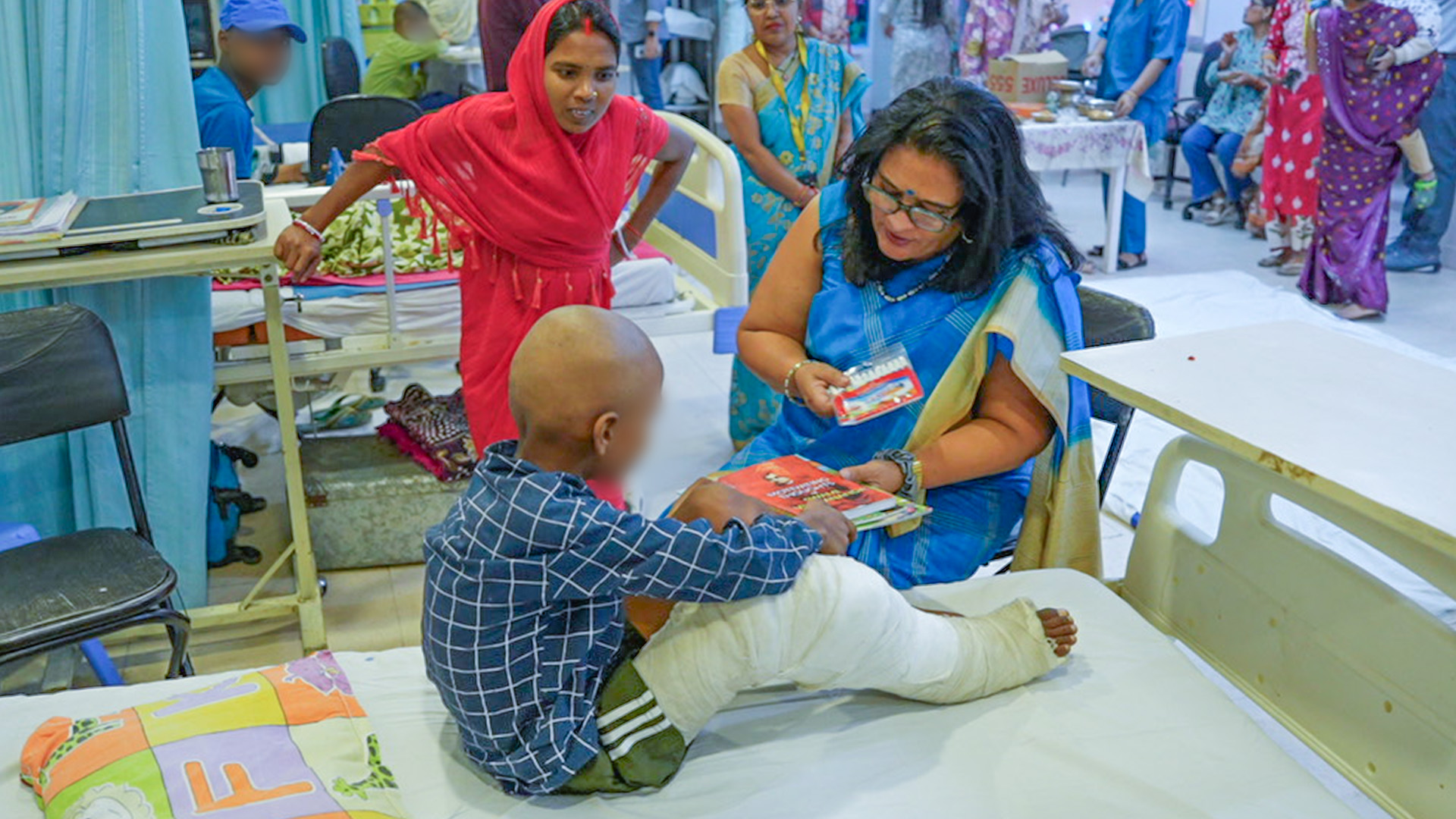
FEBRUARY 15 is observed each year as International Childhood Cancer Day to draw attention to a crisis that has long remained unseen, yet continues to destroy families. This year, the global community gathers under the theme “Demonstrating Impact: From Challenge to Change.” But for Poonam Bagai, the Founder-Chairperson of CanKids KidsCan, the impact isn’t just measured in statistics, it’s measured in a promise made during the darkest hours of her own life.
A plea bargain with God
In 2000, Poonam was a 38-year-old mother of two, living a comfortable life abroad, when she was diagnosed with colon cancer. Amidst the grueling cycles of chemotherapy and the uncertainty of survival, she found herself in a spiritual negotiation that would change the landscape of Indian pediatric care.
“I pledged that if I could live, if I could survive, then I promise I will go back to India, and I will look after every kid with cancer in India,” Poonam says. “That way, I could know that I survived for a reason. It was like a plea bargain with God, honestly,” Poonam recalls.
When she returned to India, the reality was a stark contrast to the care she had received abroad. She saw families sleeping on pavements outside hospitals, parents carrying their frail children through monsoon rains, and a survival rate that languished at 35%, less than half of what is seen in high-income nations. She realised that in India, cancer didn’t just affect a child but could mean financial devastation for the entire family for generations.
The anatomy of a medical nightmare
“When a doctor tells a family your child has cancer, I think perhaps the mind shuts down after the letter C,” Poonam explains. For the underprivileged, the shock is immediately followed by a logistical nightmare. “Families often come having taken a private loan, putting their ancestral land up as collateral. Often, even that is not enough to cover the first month of treatment.”
This financial distress leads to “treatment abandonment,” where parents, seeing no way to pay for the long road ahead, simply take their children home. To combat this, CanKids developed a “gap-filling model” that addresses the barriers between a diagnosis and a cure.
The “YANA” philosophy: More than medicine
Through the YANA (You Are Not Alone) program, CanKids has built a presence in over 141 cancer centers across 22 Indian states. Poonam’s vision was never just about paying for chemotherapy; it was about the holistic “supportive care” that keeps a child in the hospital and in the fight.
Nutrition and Hygiene: Providing specialized kits and supplements to ensure a child’s body is strong enough to handle the medicine.
Canshala (Education): Recognising that a child shouldn’t lose their future while fighting for their life, these special schools operate within or near hospitals so children don’t fall behind their peers.
Psychological Support: Counseling for parents who are often paralysed by guilt or fear
“Every child deserves a future full of hope, dreams, and possibilities,” Poonam insists. “A child fighting cancer loses their childhood. We need you to give them back their childhood… to give them their golden chance to live, laugh, and grow.”
The organisation’s commitment to children with cancer and their families, reflects Poonami’s selfless endeavour to reach every child with Cancer whose treatment could be stopped because of poverty. It’s an infectious energy that has mobilized thousands of volunteers and donors.
Till date CanKids has reached over 60,000 children, providing everything from ₹10,000 chemotherapy cycles to life-saving growth factor injections that prevent fatal infections during treatment.
The long road ahead
Despite the achievements, the onground situation, to many, would seem bleak. Countless children from poor family could lose the battle against cancer just for the want of money. But Poonam remains a “woman on a mission.” Her work is now a critical part of the WHO Global Initiative for Childhood Cancer, which aims to reach a 60% survival rate globally by 2030.
“I remember telling God: For someone who made a pledge, you have really made me work very, very hard,” she says with a reflective smile. “I think I have fulfilled my pledge, but I don’t think God thinks so as yet. There are still too many children we haven’t reached.”
As the sun sets on another February 15, the message from the survivors at CanKids is clear: Cancer is curable, but only if the community stands behind the patient. Through collective action, we can ensure that a child’s postal code or bank balance never determines whether they get to celebrate their next birthday.
Choosing to tread the proverbial road less travelled, Ramon embarked upon a career in journalism and spent over 8 years working for various media organisations. A deeper calling to create a sustainable impact in the lives of the less fortunate compelled him to join the social sector. Ramon is a minimalist at heart and an explorer in spirit.
Discover more from
Subscribe to get the latest posts sent to your email.