

INDIA has always been a giving nation. From the coin dropped into a beggar’s palm at a traffic light to the sack of grain left at a temple, giving in India is woven into the fabric of daily life. It is instinctive, habitual, and deeply human. But for all its warmth and scale, much of this generosity has remained invisible — untracked, unmeasured, and unconnected to the larger architecture of social change. That is beginning to change. The Centre for Social Impact and Philanthropy (CSIP) at Ashoka University has released its third edition of How India Gives, a landmark report that finally puts numbers to what most Indians already know in their hearts: that giving in India is not the preserve of the wealthy few, but a mass, everyday phenomenon that cuts across income, geography, and community.
The Scale of Everyday Giving in India
The report estimates that India’s household giving ecosystem is worth approximately ₹540 billion annually. This figure alone reframes how we think about philanthropy in India. The story of giving in India has long been told through the lens of corporate CSR budgets and billionaire pledges. But this report argues convincingly that the real engine of Indian generosity is the ordinary household — the family that donates food at a local shelter, the worker who volunteers at a gurdwara, the grandmother who presses a note into the hands of someone in need.
Based on 7,225 nationally representative surveys across 20 states, the report finds that 68% of Indians contribute in some form — through cash, in-kind support, or volunteering. In-kind contributions lead at 46%, followed by cash at 44%, with around 30% of respondents reporting volunteering. These are not insignificant numbers. Giving in India, it turns out, is broad-based, decentralised, and culturally embedded in ways that no single statistic can fully capture.
Where the Money Goes — and Where It Doesn’t
Understanding giving in India also means understanding its limitations. Nearly 46% of contributions flow to religious organisations, while 42% go directly to individuals such as beggars. Only around 15% of donations reach non-religious, organised institutions — the NGOs and nonprofits working systematically on health, education, and livelihoods.
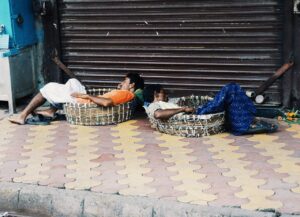
This is both a challenge and an opportunity. Giving in India is generous but fragmented. It is driven by faith, proximity, and face-to-face relationships rather than by structured development goals. In-person canvassing remains the most effective engagement channel at 25%, with social media at 15% — a reminder that trust and personal contact still form the bedrock of philanthropic participation in this country.
Who Gives — and Why
One of the report’s most valuable contributions is its segmentation of Indian donors into four archetypes. Grassroot Givers — 55% of the population — are typically rural, motivated by faith and community ties. Aspirational Givers, at 25%, are educated but financially constrained. Practical Givers, at 14%, are largely urban with a focus on immediate, visible needs. Well-off Givers, just 6%, show higher digital engagement and give both cash and in-kind support.
What this tells us about giving in India is profound: generosity does not simply scale with wealth. Even among households with a monthly consumption of ₹4,000–₹5,000, about half report contributing. Giving in India is not a luxury — it is a reflex, shaped by culture, community, and conscience. Education and geography intersect with income to produce a philanthropic landscape that is far more textured and democratic than it appears from the outside.
From Informal Acts to Organised Impact
In the US, in 2024, individuals contributed $392.45 billion, forming 66% of total charitable giving. Everyday donors constitute a major pillar of American philanthropy.
The How India Gives report says, “In mature markets, everyday giving by individuals constitutes a large share of NGO funding. Whereas, in India, individual giving is largely informal and hard to track. Strengthening formal channels could help NGOs draw, measure, and scale these contributions, building a more diversified and sustainable philanthropic ecosystem.”
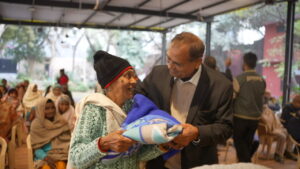
The report’s most pressing challenge — and its most important insight — is this: how does India translate its vast, informal generosity into structured, lasting social impact? The gap between a willing donor and a trustworthy cause has historically been bridged only by personal relationships or institutional knowledge. Most ordinary givers simply did not know where to give, or whether their contribution would be used well.
This is where retail giving — donations by ordinary individuals rather than high-net-worth donors — is finding powerful new expression, and where crowdfunding in India is beginning to reshape the landscape. As smartphone penetration deepens and digital payments become second nature for millions of Indians, crowdfunding in India is emerging as a meaningful bridge between everyday generosity and organised social impact — addressing precisely the trust deficit that the report identifies as the sector’s greatest obstacle.
Give.do and Giving in India
Platforms like give.do are at the forefront of this shift. Rather than asking donors to navigate an opaque and unfamiliar landscape of thousands of NGOs, give.do brings together a large, carefully vetted pool of verified organisations — spanning causes from child education and women’s empowerment to rural healthcare and environmental conservation. Every NGO on the platform is rigorously screened. Every donation is tracked. Impact reports are shared with donors so they can see exactly where their money went and what it achieved.
For a nation where giving in India has long been driven by face-to-face trust, this kind of institutional transparency is transformative. A donor in Bengaluru or Mumbai can now fund a cataract surgery for a rural elder in Jharkhand, support a girl’s education in Rajasthan, or provide a meal to a family in Bihar — not on faith alone, but with the assurance of accountability and verified impact. Crowdfunding in India, through platforms like give.do, is making giving in India more deliberate, more informed, and more effective than ever before.
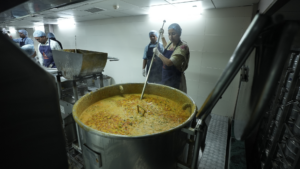
It also democratises philanthropy in a way that was never before possible. A contribution of ₹500 or ₹1,000 can be part of a collective effort that funds something genuinely transformative. This is giving in India at its most inclusive — small acts, aggregated into large impact, enabled by technology and anchored in trust.
Going vernacular in fundraising
Giving in India is not just about how much people give — it is also about how they are spoken to. And increasingly, the evidence suggests that language matters enormously.
Sumit Tayal, CEO of give.do, India’s leading crowdfunding platforms, has written compellingly about this in a recent article for India Development Review. He argues that the future of fundraising in India lies not in reaching more people. But in reaching them more meaningfully in the language they think, feel, and trust in.
His team discovered this firsthand while shooting a fundraising video with a nonprofit leader in Tamil Nadu. When she switched from English to Tamil mid-interview, something shifted. Her account of children found in railway stations and temples became raw, emotional, and deeply human. The campaign that followed received generous donations. The lesson was simple — people give more when spoken to in their own language.

This insight carries significant weight in a country where nearly 98% of internet users in Tier-II, Tier-III cities and rural areas consume content in Indic languages. Yet online fundraising in India remains dominated by Hindi and English, leaving vast audiences underserved and underengaged.
Give’s own data backs this up. Engagement rates for content in Tamil, Bengali, and Marathi consistently outperform English on its social media handles. Donors in smaller cities and rural areas respond far more to appeals in their mother tongue.
Tayal’s argument is ultimately about dignity as much as strategy. For giving in India to reach its full potential, fundraising NGOs and platforms must change tack. They should stop translating their messages and start originating them in the languages their donors actually live in. As crowdfunding in India matures, platforms like give.do are leading the way. They are building a future where every donor, regardless of language or location, feels seen, trusted, and moved to act.
For a more generous India
The How India Gives report closes with a question that every stakeholder in India’s social sector must sit with: how do we build bridges between the vast, informal generosity that already exists and the organised institutions that can channel it most effectively?
Giving in India has never been the problem. Scale, structure, and trust have been. Digital platforms are lowering the barriers to informed, verified, and impactful giving. As they do, the culture of giving in India is evolving from a private, informal act into a powerful, collective force for good.

Kumara was a professional journalist for over 15 years, with stints in The Telegraph and Reader’s Digest. He grew up hating maths and physics. He is a post-graduate in history. Kumara believes that cricket and Seinfeld have answers to most questions that life throws at you.
Discover more from
Subscribe to get the latest posts sent to your email.