
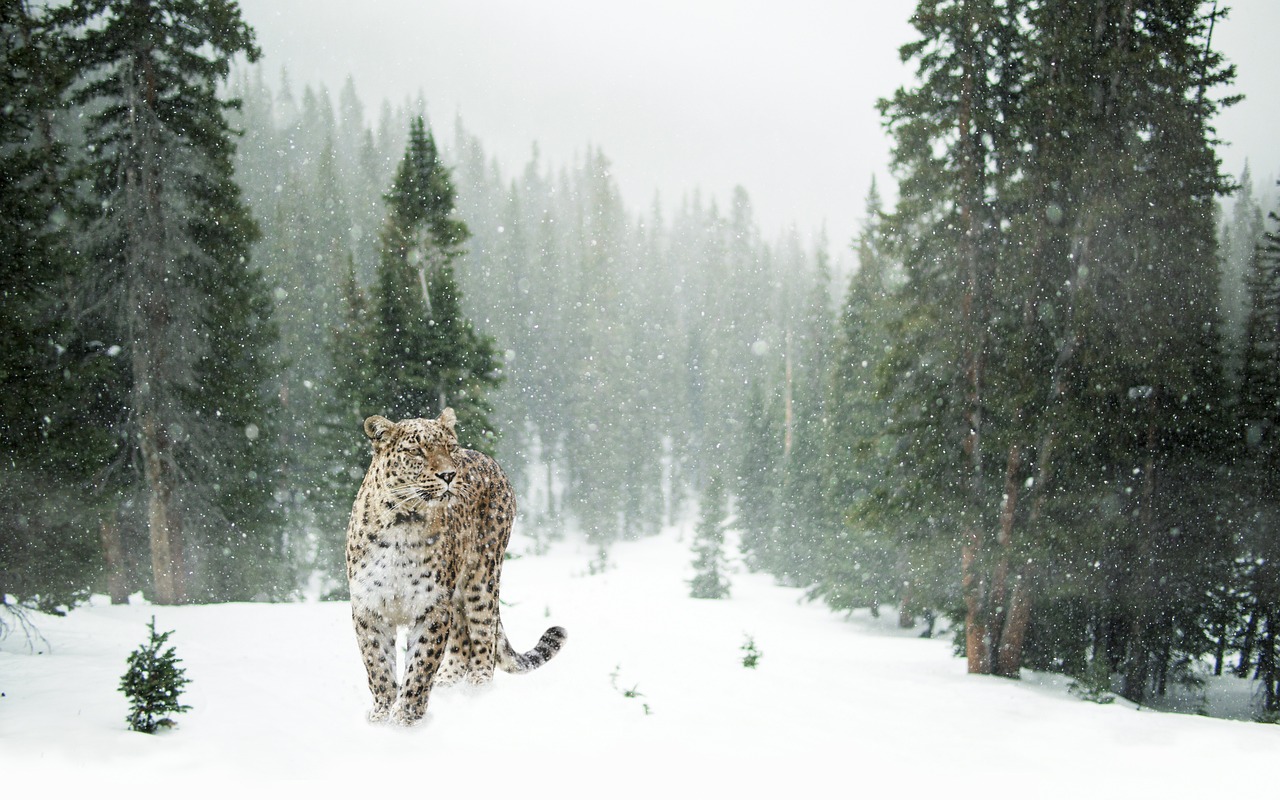
IN the shadow of the world’s highest mountains, where jagged peaks pierce the clouds, roams a creature of myth and majesty, the snow leopard. Known as the “Ghost of the Mountains” for its ethereal camouflage against mountain rocks, this elusive big cat embodies the fragility and resilience of high-altitude ecosystems. October 23, 2025, proclaimed by the United Nations as the International Day of the Snow Leopard, let’s pause to honor this iconic species, particularly in India, where conservation triumphs are rewriting a story once edged on peril.
Origins of International Day of the Snow Leopard
The International Day of the Snow Leopard, traces its roots to 2013, when leaders from the 12 snow leopard range countries gathered at the Global Snow Leopard Forum in Bishkek, Kyrgyzstan, under the Global Snow Leopard & Ecosystem Protection Program (GSLEP). They proclaimed the inaugural day in 2014 to spotlight the endangered species’ plight. This observance underscores the urgent need for habitat protection, anti-poaching efforts, and community coexistence, fostering global collaboration to safeguard these “ghosts of the mountains” from extinction amid climate threats and human encroachment. For more, visit the UN’s International Day of the Snow Leopard page.
Unpacking India’s Snow Leopard conservation story
India’s Himalayan frontiers, spanning Ladakh, Himachal Pradesh, Uttarakhand, Arunachal Pradesh, and Sikkim, shelter about 10-15% of the global snow leopard population. The first-ever national survey, unveiled in January 2024 by the Ministry of Environment, Forest and Climate Change (MoEFCC), tallied 718 individuals across 120,000 square kilometers of rugged terrain. This figure, derived from camera traps, genetic sampling, and occupancy modeling, marked a watershed moment. No longer shrouded in guesswork, the data revealed a baseline for action: an estimated 663 adults and 55 cubs, with Ladakh alone harboring 477, 68% of the total and boasting the world’s highest density at roughly one per 100 square kilometers.
Yet, 2025 has brought fresh glimmers of growth, underscoring the momentum of dedicated stewardship. In Himachal Pradesh, a state-wide survey concluded just weeks ago revealed a staggering 62.7% surge: from 51 adults in 2021 to 83 in 2025. Conducted across 26,000 square kilometers using over 1,000 camera traps in six key sites, the study, partnered with the Nature Conservation Foundation (NCF), not only confirmed this rise but also documented bonus biodiversity wins. For the first time, a Pallas’s cat was officially sighted in Kinnaur, and the elusive woolly flying squirrel was rediscovered in Lahaul after decades. These aren’t isolated anecdotes; they signal healthier ecosystems where snow leopards, as apex predators, regulate prey like blue sheep and ibex, fostering balance from the treeline upward.
Why this growth matters
The significance of this growth cannot be overstated. Historically, snow leopards teetered on the brink. Classified as Endangered by the IUCN since 1986, their numbers had dwindled by over 20% in the preceding quarter-century, driven by a toxic cocktail of threats. Poaching for fur and bones fueled a black market that decimated local prides, while retaliatory killings from pastoral communities, whose yaks and goats fell prey to the cats, exacerbated conflicts. Habitat fragmentation from hydropower dams, mining, and tourism infrastructure carved up vital corridors, shrinking alpine meadows essential for foraging. Climate change, the silent saboteur, loomed largest: projections warn of up to 30% habitat loss as warming shifts treelines upward, forcing prey (and predators) into narrower bands of suitable terrain. Genetic studies paint a grim portrait too, snow leopards exhibit the lowest diversity among big cats, heightening inbreeding risks and vulnerability to diseases in a fluctuating environment.
In India, this crisis echoed the broader colonial-era plunder of wildlife, where “sportsmen” and unchecked development pushed species like the snow leopard toward oblivion by the mid-20th century. By the 1970s, sightings were whispers in the wind, with populations fragmented into isolated pockets. The species’ “precarious” survival hinged on a pivot: from exploitation to empathy. Enter Project Snow Leopard, launched in 2009 under MoEFCC’s Integrated Development of Wildlife Habitats scheme. This blueprint emphasized landscape-scale conservation, weaving in traditional knowledge from nomadic herders and incentivizing coexistence through insurance for livestock losses and eco-tourism revenues.
The fruits are evident in those Himachal numbers, a testament to community buy-in. Local homestays now generate income from “snow leopard safaris,” turning potential adversaries into guardians. In Ladakh, where 93,392 square kilometers show occupancy, a 2025 PLOS ONE study identified 126 unique adults via 26,130 camera captures, crediting fortified predator-proof corrals and prey augmentation. Globally, India’s 718 leopards represent one-sixth to one-ninth of the estimated 4,000-6,500 worldwide, positioning the nation as a linchpin in the Global Snow Leopard & Ecosystem Protection Program (GSLEP), born from the 2013 Bishkek Declaration.
Regional trends in India’s Snow Leopard population
The 2024 national assessment pegged India’s snow leopard population at 718, with regional surveys in 2025 revealing varied growth patterns across key habitats. Ladakh, hosting 477 leopards (up from ~400 in 2021, a 19% rise), accounts for 68% of the national total, driven by extensive camera trapping across 93,392 square kilometers. Himachal Pradesh saw a striking 62.7% increase, from 51 adults in 2021 to 83 in 2025, based on over 1,000 camera traps and bolstered by new species sightings. Uttarakhand’s population held steady at around 42 (up 5% from ~40), with scat genetics anchoring estimates amid tourism pressures. Sikkim reported a modest 8% uptick to ~27 from ~25, supported by community patrols and sign surveys. Arunachal Pradesh, with ~16 leopards (up 7% from ~15), benefited from remote sensing and cross-border focus. Nationally, the 5-10% growth to 718 reflects a robust baseline, with densities ranging from 0.5-1.5 leopards per 100 square kilometers, signaling cautious optimism for conservation efforts. (Source: MoEFCC/WII Report)
The shadow of extinction
Rewind to the 1980s, and India’s snow leopards were ghosts in more than name, teetering on regional extinction. IUCN-listed as Vulnerable (downgraded from Endangered in 2017 but still precarious), their numbers had plunged over 20% in the prior 25 years. Poaching ravaged pelts and bones for illicit trade, while pastoral herders, losing up to 10% of livestock annually, resorted to snares and gunfire. Habitat hemorrhage from unchecked mining, dams, and roads splintered corridors, isolating prides and amplifying genetic bottlenecks. Climate change, the existential wildcard, warped prey dynamics: warmer winters shrink snowpack, forcing leopards into lower, conflict-prone elevations.
By the 1970s, post-colonial “trophy hunts” had decimated herds, with sightings rarer than monsoon miracles. A 1986 CITES Appendix I ban stemmed the bleed, but without holistic intervention, models forecasted 50% range loss by century’s end. India’s pivot came via Project Snow Leopard (PSL) in 2009, a MoEFCC flagship blending protected areas with socioeconomic incentives. PSL’s landscape approach, covering 200,000 km², integrated herder cooperatives and insurance schemes, slashing conflicts by 60% in pilot zones.
The role of leading NGOs
No revival unfolds in isolation; India’s snow leopard saga owes much to NGOs bridging policy chasms with grassroots grit. The Snow Leopard Trust (SLT), founded in 1981 and deeply embedded in India since 1998, spearheads “Himalayan Homestays” and predator-proof corrals, safeguarding 5,000 livestock annually while training 300+ youth rangers. Their “Women for Snow Leopards” initiative, launched in 2024, has empowered 200 women in population modeling, fostering gender-inclusive stewardship.
The Nature Conservation Foundation (NCF), a Bangalore-based powerhouse, co-led Himachal’s 2025 survey and deploys AI-enhanced camera grids for real-time monitoring. NCF’s “Secure Himalayas” project restores 10,000 hectares of degraded pastures, enhancing prey bases and carbon sequestration. Complementing these, the Snow Leopard Conservancy India Trust (SLC-IT), established in 2000, focuses on Ladakh and Spiti with “Homing for Snow Leopards”, a rehab program for injured cats that has released 15 individuals since 2020. SLC-IT’s community guards patrol 50,000 km², reducing poaching by 70%.
WWF-India amplifies advocacy, lobbying for PSL expansions under CITES and running anti-trafficking ops that dismantled three syndicates in 2024. Wildlife SOS rounds out the vanguard with rapid rescues, like the October 2025 flood-relocated cub in Uttarakhand, while integrating veterinary genomics for health surveillance. These organizations, often collaborating via GSLEP, pool resources for transboundary patrols with Nepal and China, embodying collective resilience.
Individual conservators making history
Behind the institutional muscle stand visionary individuals whose passion has scripted this comeback. Charudutt Mishra, PhD, stands as a towering figure, the Executive Director of SLT and a 2022 BBVA Foundation laureate. A Spiti native, Mishra’s “Livestock Insurance Scheme,” piloted in 2000, has compensated 1,000+ herders, transforming foes into allies. His mantra, “conservation as co-creation”, earned a 2005 Whitley Award, and his genomic studies have mapped 20 connectivity corridors, averting isolation.
Tsewang Namgail, SLC-IT Director and Ladakh’s field titan, brings decades of boots-on-snow expertise. A Changthang herder-turned-PhD, Namgail’s GPS-collar migrations have informed PSL’s zoning, while his women’s monitoring collectives track 100+ leopards yearly. Honored with the 2018 Whitley Gold Award, he champions “pastoral wisdom” in policy, crediting locals for 80% of SPAI data.
Koustubh Sharma, SLT’s India Program Director, fuses tech with terrain, his 2025 occupancy models refined Ladakh estimates, integrating satellite telemetry for climate forecasting. A WII alumnus, Sharma’s “Snow Leopard Census App” democratizes data collection, engaging 500 volunteers. Rinchen Gyatso, NCF’s high-altitude coordinator, leads Spiti patrols, her ethno-ecological insights yielding a 2024 prey augmentation blueprint that boosted ibex by 25%.
These conservators, often risking frostbite and isolation, embody the human spark igniting systemic change, proving one determined soul can echo across peaks.
Challenges in a warming world
Triumphs notwithstanding, peril still lurks. October 2025’s Stanford genomic alert flags inbreeding risks, urging captive adjuncts. Hydropower sprawl threatens 10% of habitats yearly, and erratic monsoons disrupt foraging. Poaching, though down 50%, persists via online markets.
Action for tomorrow
As #SnowLeopardDay trends with WII quizzes and 23-minute awareness treks, India’s odyssey, from phantom to phoenix, inspires. Protect these ghosts, and the mountains thrive. Join the chorus: advocate, trek responsibly, support NGOs. The Himalayas await our resolve.

Choosing to tread the proverbial road less travelled, Ramon embarked upon a career in journalism and spent over 8 years working for various media organisations. A deeper calling to create a sustainable impact in the lives of the less fortunate compelled him to join the social sector. Ramon is a minimalist at heart and an explorer in spirit.
Discover more from
Subscribe to get the latest posts sent to your email.