
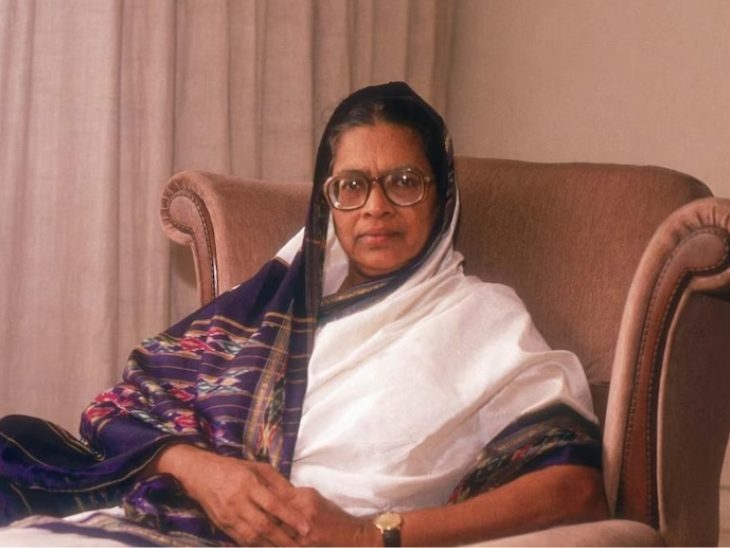
EVERY year on March 10, the world pauses to honour women judges. The United Nations designated this day in 2021. It exists not merely to celebrate, but to confront an uncomfortable truth. Women constitute half of humanity. Yet in courtrooms across the globe, they remain a minority. Nowhere is this paradox sharper than in India, the world’s largest democracy. Today, therefore, is not just a celebration. It is also a call to action.
The Numbers Tell a Hard Story
India’s Supreme Court has 33 judges. Only one is a woman — Justice B.V. Nagarathna. That is barely 3 percent. Across the 25 High Courts, only 116 of 781 working judges are women — just 14.85 percent. Meanwhile, subordinate courts fare better, with women accounting for 38 percent. The reason is telling: selections there happen through competitive examinations. Merit-based tests produce more women. Opaque collegium appointments produce far fewer.
Three High Courts — Manipur, Tripura and Uttarakhand — currently have no women judges at all. The Allahabad High Court, India’s largest, has only seven women against a working strength of 110. Since September 2021, four successive Chief Justices have led the collegium. None recommended a single woman for elevation to the Supreme Court.
Why Representation Matters
Some dismiss this as mere optics. It is anything but. Women judges bring lived experience that reshapes how law is interpreted. Cases involving sexual violence, domestic abuse, reproductive rights and child custody carry emotional and social dimensions. Diverse benches see them more fully. Consequently, judgments become more grounded in reality.
Furthermore, representation sends a signal to every young woman in a law school. It tells her the bench is not a closed club. Public confidence in the judiciary also depends on who sits in judgment. A court that looks like only one part of society risks appearing to serve only that part.
Women Who Have Made Their Mark
Justice Fathima Beevi — The Pioneer
In 1989, Justice Fathima Beevi became the first woman judge of the Supreme Court of India. She broke through a wall that had stood for four decades since independence. Her elevation was not just personal — it was institutional proof that the highest court could reflect a wider India.
Justice Leila Seth — Reformer on the Bench
Justice Leila Seth became the first woman Chief Justice of a High Court, leading the Himachal Pradesh High Court in 1991. She later served on the Justice Verma Committee, which rewrote India’s sexual assault laws after the 2012 Delhi gang rape case. Her contribution to legal reform outlasted her time on the bench.

Justice Indu Malhotra — The Exception That Proved the Rule
Justice Indu Malhotra is the only woman ever elevated directly from the Bar to the Supreme Court, bypassing the High Court route entirely. In the landmark Sabarimala case of 2018, she delivered a principled dissent recognising women’s religious agency — a judgment that continues to spark debate and scholarship.
Justice Hima Kohli — Voice of Inclusion
Justice Hima Kohli served as Chief Justice of the Telangana High Court before her elevation to the Supreme Court in 2021. She championed access to justice for marginalised communities throughout her career. Her presence enriched the court’s deliberations until her retirement in 2024.
Justice B.V. Nagarathna — History in Waiting
Justice Nagarathna currently stands alone as the sole woman on the Supreme Court bench. On September 24, 2027, she is expected to become India’s first ever woman Chief Justice. Yet the tenure will last only 36 days. History will be made — but hurried through in barely five weeks. That 36-day window says everything about how late representation has arrived.
India Lags the World
A global comparison makes uncomfortable reading. Europe leads with women making up 54 percent of its judiciary. The Americas follow at 51 percent. Asia trails at just 29 percent. The United States Supreme Court has four women among nine judges. Canada’s highest court is nearly 40 percent women. Britain’s Supreme Court is 30 percent women. India, by contrast, has produced only 11 women judges out of 287 Supreme Court appointments since 1950 — 3.8 percent across seven decades.
Chief Justice Surya Kant, speaking at a national conference on Women’s Day this year, urged collegiums to treat women’s elevation as a norm, not an exception. Words are necessary. Action is more so.
Gender must become an explicit criterion in collegium deliberations — not a footnote, but a commitment. Talented women at the Bar must be identified early, before their eligibility window narrows. Courtroom infrastructure must become genuinely gender-friendly. Transparent, merit-based selection — which already works in subordinate courts — must inspire reform higher up.
The Larger Truth
Justice is not only about the verdict. It is also about who delivers it, and who the system sees. A judiciary that reflects only part of society will, over time, lose the trust of the other part. India’s Constitution promises equality under Article 14. Its courts must embody that promise — not merely declare it.
Justice Nagarathna’s forthcoming 36-day tenure as Chief Justice will be historic. Nevertheless, it should also be a provocation — a reminder that one milestone does not end the journey.
Half the nation deserves half the bench. Not someday. Now.

Give exists to alleviate poverty by enabling the world to give. Established in 2000, Give, together with its partners, is the largest and most trusted giving platform in India. Give enables individuals and organizations to raise and donate funds conveniently to any cause they care about, with offerings including crowdfunding, corporate giving, cause marketing, and philanthropy consulting. Give’s community of 2.6M+ donors supports 3,000+ verified nonprofits, serving 15M+ people across the country.
Discover more from
Subscribe to get the latest posts sent to your email.