
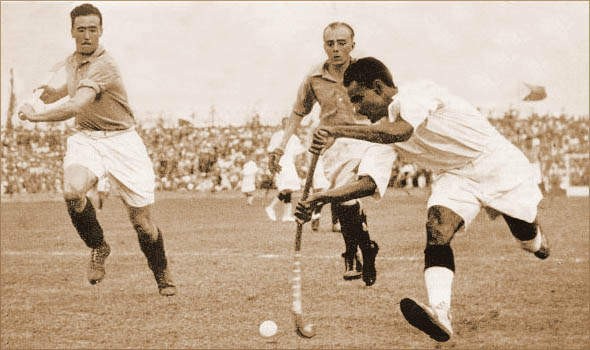
EVERY year on August 29th, India celebrates National Sports Day. This date is not chosen arbitrarily; it is the birth anniversary of a man whose name is synonymous with sporting excellence and magical prowess in India—Major Dhyan Chand Singh. Dhyan Chand’s status in hockey remains as unquestioned and sacrosanct as Don Bradman’s is in cricket.
Widely hailed as the “Wizard of Hockey,” Dhyan Chand’s story is one of extraordinary talent, relentless dedication, and an almost supernatural command over the hockey stick that brought unprecedented glory to India. His legacy is not merely etched in gold medals but in the very spirit of Indian sports, serving as a benchmark for greatness and a source of inspiration for generations.
Dhyan Chand was born on August 29, 1905, in Allahabad, British India, to Sameshwar Dutt Singh Bais, a soldier in the British Indian Army, and Shyama Singh. Hailing from the Bais Rajput community, his early life was marked by constant movement due to his father’s military postings. This nomadic existence across various Indian cities inadvertently built in him a resilience and adaptability that would later define his sporting career. Interestingly, his initial sporting passion was not hockey but wrestling, a popular pursuit in his community. It was only after his family settled in Jhansi that he began to engage with hockey, drawn to its simplicity. With a makeshift stick and ball, he started practicing, his innate talent beginning to surface without any formal coaching. His formal education ended after the sixth grade, but his real education on the hockey field was just beginning.
Joining the army and the birth of a legend
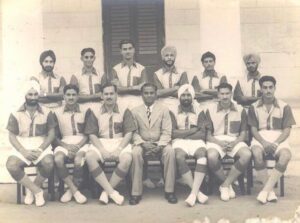
In 1922, at the age of 17, Dhyan Chand enlisted in the British Indian Army as a sepoy. This decision proved to be the pivotal moment that channeled his raw talent. The army had a strong sporting culture, particularly in hockey, and it provided the perfect platform for him to flourish. His dedication was unparalleled. He would often practice late into the night after his regimental duties, honing his skills under the moonlight. This nocturnal practice routine earned him the name ‘Chand’ (moon) from his fellow soldiers, and the name Dhyan Chand stuck for life. His talent quickly became undeniable. By the mid-1920s, he was a standout player in army tournaments. His first major breakthrough came in 1926 when he was selected for the Indian Army team touring New Zealand. The team’s dominant performance, winning 18 of 21 matches, was a sign of things to come, with Dhyan Chand’s dazzling skills captivating audiences abroad.
Arrival on the world stage
The 1928 Amsterdam Olympics marked India’s debut in Olympic hockey, and it was here that Dhyan Chand announced his genius to the world. The Indian team, largely unknown globally, delivered a performance of breathtaking dominance. They went through the entire tournament without conceding a single goal, amassing 29 goals for themselves. Dhyan Chand was the undisputed star, scoring 14 of those goals, including a brace in the 3-0 final victory over the Netherlands. His ball control, dribbling, and goal-scoring prowess were so otherworldly that the international press christened him the “Wizard of Hockey.” It was the dawn of India’s golden era in hockey, and Dhyan Chand was its shining sun.
The 1932 Los Angeles Olympics: The Formidable Chand Brothers
By the time of the 1932 Los Angeles Olympics, Dhyan Chand was a global superstar and the Indian team was the overwhelming favourite. This tournament also saw the rise of another star—Dhyan Chand’s younger brother, Roop Singh. Together, they formed a devastatingly prolific attacking duo. In a strangely formatted tournament with only three teams, India’s dominance was absolute. They defeated Japan 11-1 and then annihilated the United States 24-1 in the final, a match that remains one of the most lopsided victories in Olympic history. Dhyan Chand scored 8 goals in that final, while Roop Singh netted 10. Their coordination and understanding were telepathic, leading a American newspaper to famously describe the Indian team as being comprised of “eleven Dhyan Chands.”
The 1936 Berlin Olympics: The Pinnacle of Glory
The 1936 Berlin Olympics represented the ultimate challenge and the crowning glory of Dhyan Chand’s career. Set against the backdrop of Nazi Germany, with Adolf Hitler intending to use the Games to showcase Aryan superiority, the Indian team faced immense pressure. The final, played before a hostile German crowd and Hitler himself, was a tense affair. Frustrated by the wet turf and his spiked shoes at halftime, Dhyan Chand made a legendary decision: he played the second half barefoot.
Unencumbered, his magic truly unfolded. He weaved through the robust German defence with ethereal ease, leading India to an 8-1 victory and scoring three goals himself. The legend goes that a mesmerised Hitler, captivated by this display of non-Aryan supremacy, offered Dhyan Chand a high-ranking position in the German Army, which the patriot respectfully declined. Whether entirely apocryphal or not, the story underscores the universal awe he inspired.
Playing Style and Unmatched Skills
Dhyan Chand’s playing style was a blend of artistry, genius, and ruthless efficiency. He was dubbed the “Wizard” because it often appeared the ball was glued to his stick. His dribbling was hypnotic, leaving defenders utterly bewildered as he navigated through them with impossible changes of direction and speed. He possessed an uncanny ability to read the game, anticipating opponents’ moves before they themselves did. Beyond his individual brilliance, he was a selfless team player, always prioritising the goal over personal glory. His goal-scoring record—over 400 goals in his international career—stands as a testament to his unparalleled prowess. He didn’t just play the game; he redefined it, combining technical mastery with an inventive creativity that has never been fully replicated.
Life Beyond the Field and Later Challenges
After retiring from international hockey in 1948, Dhyan Chand continued to serve in the Indian Army, rising to the rank of Major. He was awarded the Padma Bhushan in 1956 for his monumental contributions to sport. He later took up coaching at the National Institute of Sports in Patiala, imparting his wisdom to a new generation. However, his post-playing life was not without struggle. Like many athletes of his era, he faced financial difficulties and did not receive the sustained support or recognition from the sporting establishment that his stature warranted. This period highlights a tragic paradox of Indian sport, where legends often fade from public memory without adequate care.
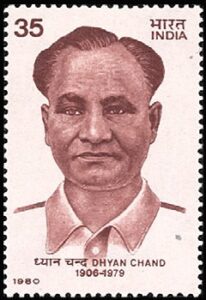
Despite these challenges, Dhyan Chand’s legacy is immortal. He is the standard against which every hockey player is measured, not just in India but across the world. To ensure his name is never forgotten, the Government of India instituted the Dhyan Chand Award in 2002, the highest lifetime achievement award for sports personalities in the country. The National Stadium in New Delhi, the hallowed ground of Indian hockey, bears his name.
Most significantly, his birthday, August 29th, is celebrated as National Sports Day, a fitting annual tribute where the highest sporting honours, including the Rajiv Gandhi Khel Ratna, are bestowed upon current athletes in his name. He remains a national icon, a symbol of a time when Indian hockey was invincible, and its magician, Dhyan Chand, was the man who made it so.

Give exists to alleviate poverty by enabling the world to give. Established in 2000, Give, together with its partners, is the largest and most trusted giving platform in India. Give enables individuals and organizations to raise and donate funds conveniently to any cause they care about, with offerings including crowdfunding, corporate giving, cause marketing, and philanthropy consulting. Give’s community of 2.6M+ donors supports 3,000+ verified nonprofits, serving 15M+ people across the country.
Discover more from
Subscribe to get the latest posts sent to your email.