
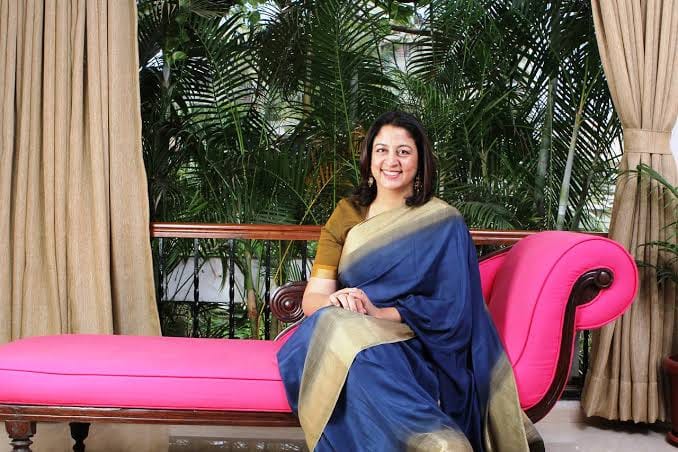
SAFEENA Husain recently made history. Her organisation, Educate Girls, won the 2025 Ramon Magsaysay Award. This is Asia’s highest honour, often called the Asian Nobel Prize. Educate Girls is the first Indian organization to receive this award. The Ramon Magsaysay Award Foundation (RMAF) praised Educate Girls’ commitment to liberate girls from illiteracy. No doubt that this award is a recognition of Safeena Husain’s efforts to infuse young women with skills, courage, and agency. A formal ceremony will take place on November 7, 2025, at Manila’s Metropolitan Theatre.
The Ramon Magsaysay Foundation specifically commended the organisation’s powerful commitment towards girls. It noted Safeena Husain’s work in addressing pervasive cultural stereotyping. This is achieved through the powerful education of girls and young women. Safeena Husain’s organisation liberates girls and women from the crippling bondage of illiteracy.
Speaking to the Foundation, Safeena Husain said, “Girls’ education is the closest thing we have to a silver bullet to solve some of the world’s most difficult problems. It is one of the best investments a country can make, impacting nine of the seventeen Sustainable Development Goals, including health, nutrition, and employment. Educate Girls remains committed to breaking the cycle of illiteracy and poverty for girls. By scaling our programs, deepening government partnerships, and embedding community-led solutions, we strive to create a brighter, more equitable future—one girl at a time,”
Safeena Husain, the person
Understanding Safeena Husain requires exploring her personal history. Her own educational journey was unexpectedly interrupted during childhood. This firsthand experience fuels her entire mission. Safeena articulated this pain in a candid Hindustan Times interview. She said, “Because of a lot of difficulties in my childhood, my own education was interrupted. So, I know how an out-of-school girl feels when your friends move ahead and you are sitting at home. You have no self-esteem or confidence left in yourself. The shame and guilt you feel for not having done as well as others.” This empathy forms the bedrock of Educate Girls’ philosophy.

Safeena Husain is a formidable academic, having graduated from the London School of Economics. Her professional journey began far from Indian villages. She worked extensively with marginalized communities across continents. Her work spanned South America, Africa, and other parts of Asia. This global perspective shaped her understanding of systemic poverty. Yet, she felt a powerful pull to return home. She left her career to confront India’s female illiteracy crisis head-on. Safeena Husain officially founded Educate Girls in 2007, starting with a powerful vision. Beyond the formidable social entrepreneur exists a multifaceted individual. Safeena Husain is currently writing a book, likely to inspire many.
The Educate Girls Model
The organisation began its work in Rajasthan’s most disadvantaged districts. Educate Girls strategically identified the neediest communities first. Teams focused on areas with the largest gender gaps in education. The organisation meticulously brought unschooled or out-of-school girls into the classroom. The work did not stop at mere enrollment. They implemented robust programs to keep these girls in school. The ultimate goal was clear and ambitious. The organisation ensured girls acquired credentials for higher education. This pathway leads directly to gainful and empowering employment. The model relies heavily on community mobilization and have built a formidable network of over 55,000 volunteers. These volunteers, called Team Balika, are local champions. They work within their own villages to create change.
According to Safeena Husain, the majority of India’s out-of-school girls live in its most remote regions, where deep poverty and rigid gender norms prevail. In these communities, a girl is often seen as a liability rather than a potential asset. The solution operates at two levels: changing local mindsets and behaviours while simultaneously driving systemic change for wider impact. Educating girls is not only a fundamental right but a powerful catalyst for progress. An educated girl is less likely to be married as a child, more likely to educate her own children, and will significantly boost the economy. It is also a key climate solution, as educating girls is one of the most effective ways to reduce global carbon emissions. Given this immense potential, Educate Girls is focused on scaling this model sustainably.
Educate Girls’ representatives identify girls who are not attending school and then convince families to enroll their daughters. The organisation also works closely with schools to improve infrastructure and quality. This grassroots approach ensures sustainable impact. The non-profit has forged strong partnerships with state governments. This allows for scaling their effective model. To date, they have partnered to mobilize over two million girls. Their work energizes over 30,000 villages across India. They operate primarily in Rajasthan, Madhya Pradesh, Uttar Pradesh and Bihar.
Pioneering innovation: The World’s First Development Impact Bond in Education
Beyond grassroots work, Safeena Husain championed financial innovation. In 2015, Educate Girls launched a groundbreaking instrument. They created the world’s first Development Impact Bond (DIB) in education. This model fundamentally shifted development funding. It directly tied financial investment to measurable, verified outcomes. Investors provided upfront capital for the program’s operation. Donors then repaid the investors only upon achievement of agreed results. This created a powerful incentive for efficiency and effectiveness. The pilot focused on 166 schools in Rajasthan’s Bhilwara district and the targets were clear: enroll out-of-school girls and improve learning outcomes. The results were staggering and exceeded all expectations. The program achieved a phenomenal 160% of its learning target. It also hit 116% of its enrollment goal. This resounding success proved the model’s viability and it set a new global benchmark for education funding. Ultimately, it demonstrated that outcomes-based financing could work brilliantly in development. The bond’s success attracted worldwide attention and acclaim. It positioned Educate Girls as a thought leader in social innovation.
Expanding Reach: The Pragati Initiative for Older Learners
The team recognised another critical gap in the system. Many young women had already dropped out of formal education. A traditional classroom would not suit them. In response, they launched the Pragati initiative. This innovative open-schooling program serves a different demographic and it empowers young women between the ages of 15 and 29. It allows them to complete their secondary education outside the conventional system. The program provides them with accredited certifications. This opens doors to lifelong opportunities they previously lacked. The initial cohort was modest, containing just 300 determined learners. The program’s success has fueled incredible growth. It has now expanded to empower over 31,500 women across the country. Pragati embodies the organization’s comprehensive approach. and it ensures no girl is left behind, regardless of her age or circumstance.
Crisis Management During the Pandemic
The COVID-19 pandemic presented an unprecedented threat to education. Safeena Husain’s leadership was tested during this global crisis. Schools shut down indefinitely across the country. The organisation predicted the devastating consequences immediately. They knew girls would be disproportionately affected. Many might never return to the classroom. Educate Girls pivoted its operations with remarkable speed and launched a massive Covid Relief Initiative in 2020. They distributed essential rations to poverty-struck households. This addressed immediate hunger, a barrier to education. They also distributed vital hygiene kits to protect communities. The organisation reached over 200,000 households with critical supplies. This effort benefitted more than one million individuals directly. The camps provided crucial educational support to children. They prevented a complete breakdown of learning.
Safeena Husain herself piloted and championed this program. Educate Girls was able to reach an astounding 340,000+ children across their operating areas. They simultaneously ran awareness campaigns about health and safety. They amplified the use of government learning applications like DIKSHA. This multifaceted response highlighted the organization’s agility and deep commitment.
Keeping the Girl at the Center
Throughout this growth and innovation, the core philosophy remains unchanged. Safeena Husain maintains an unwavering focus on the mission. She encapsulated this in an interview with Entrepreneur.com. She states, “No mission drift, no mission creep—the girl is always at the center of everything we do.”
This simple principle guides every strategic decision and every program. It ensures the organization remains effective and true to its cause. This clarity of purpose is a key ingredient in their success.

Educate Girls has set its sights on an ambitious and bold goal for the next decade in its new strategic plan: to impact 10 million learners in 10 years. The organisation believes it can make a huge dent in the problem of out-of-school girls, from primary through secondary school, with an approach that is simultaneously hyperlocal and focused on larger systemic change. In its annual report for 2023-24, Educate Girls says that its efforts are focused on sustainable change that will bring change in the lives of women and girls, as well as civil society.
Magsaysay Award: A great achievement for India
With this award, Safeena Husain joins an illustrious group of Indians. Previous Ramon Magsaysay awardees include iconic figures. Social worker Mother Teresa received the award in 1962. Politician and activist Jayaprakash Narayan was honored in 1965. The legendary filmmaker Satyajit Ray won the prize in 1967. More recently, journalist Ravish Kumar received it in 2019. Environmental activist Sonam Wangchuk was awarded in 2018. Other notable winners include politician Arvind Kejriwal and RTI activist Aruna Roy. Former IPS officer Kiran Bedi and journalist and author Arun Shourie are also recipients. This places Safeena Husain’s work in the context of India’s greatest contributions to Asia.

The Ramon Magsaysay Award is a fitting tribute to this legacy. It celebrates a lifetime of service dedicated to a simple yet revolutionary idea. Educating a girl liberates her potential and transforms her community. All the best, Safeena Husain. The nation watches with pride and anticipation for your next chapter.
While you can support Safeena Husain and Educate Girls by making a donation here, you can also join our mission, Every Girl in School, by making a small contribution every month. ₹1,000 /month to give.do’s mission Every Girl in School will support one girl who is out of school with books, uniforms, fees and meals. Your donation ensures they remain in school till they graduate. Our trusted NGO partners take care of the girl children and provide them with the gift of education and a great future ahead.

Kumara was a professional journalist for over 15 years, with stints in The Telegraph and Reader’s Digest. He grew up hating maths and physics. He is a post-graduate in history. Kumara believes that cricket and Seinfeld have answers to most questions that life throws at you.
Discover more from
Subscribe to get the latest posts sent to your email.