
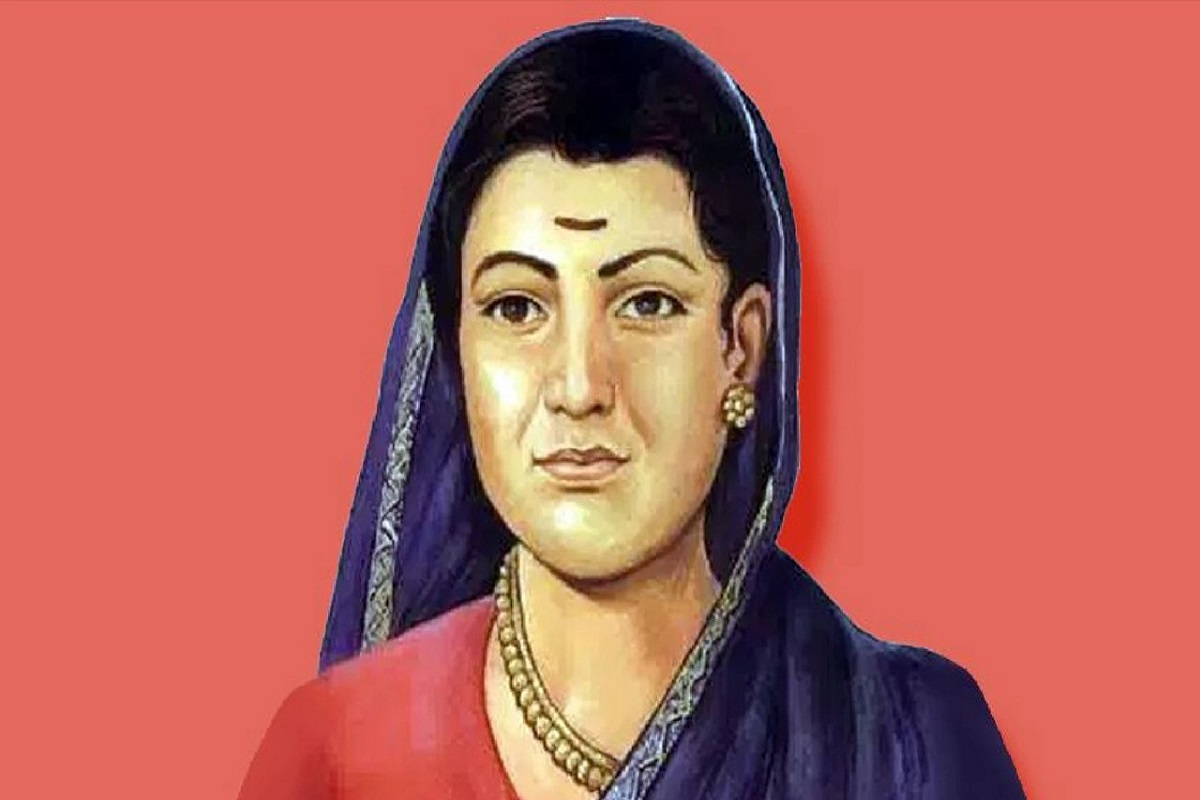
ON January 3rd, India commemorates the birth anniversary of a woman who dared to dream of an equal society when the very thought was revolutionary. Savitribai Phule, born on January 3, 1831, in Naigaon, Maharashtra, became India’s first female teacher and a trailblazer in women’s education and social reform. Her life story isn’t just about breaking barriers—it’s about shattering them with unwavering courage and rebuilding society on the foundation of equality and education.
Savitribai married Jyotirao Phule at the age of nine or ten, when he was thirteen, and was illiterate at the time of her marriage. But what could have been a story of lost potential became one of extraordinary transformation. Jyotirao, recognizing his wife’s eagerness to learn, educated her at home. She enrolled in two teachers’ training programs—one at an institution run by American missionary Cynthia Farrar in Ahmednagar, and another at a Normal School in Pune, becoming India’s first trained female teacher and headmistress.
This wasn’t merely personal achievement; it was the beginning of a movement that would change the course of Indian society.
Opening Doors That Were Meant to Stay Closed
In January 1848, Savitribai and Jyotirao Phule, along with Sagunabai Kshirsagar, started India’s first girls’ school at Bhidewada in Pune, with a progressive curriculum of mathematics, science, and social studies. At a time when educating girls—especially from lower castes—was considered a transgression against social order, this act was nothing short of revolutionary.
The path to the school was literal and metaphorical warfare. Savitribai was often verbally abused and had stones, mud, and dung thrown at her on the way to her school, leading her to carry a spare sari to change into upon arrival. Yet she persisted, day after day, with quiet dignity and unshakeable resolve.
By 1851, the Phules were running three schools attended by more than 150 girl students, eventually opening a total of 18 schools for girls in the Poona region. To prevent dropouts, she introduced stipends for students—an innovative approach that recognized economic barriers to education. In 1852, the British government declared her the best teacher in the Bombay Presidency.
Beyond the Classroom: A Multifaceted Reformer
Savitribai’s vision extended far beyond literacy. She understood that true empowerment required dismantling multiple oppressive structures simultaneously.
In 1854, she opened a shelter for widows, and in 1864 built a larger shelter for widows, destitute women, and child brides rejected by their families, providing them with education. She established the Balhatya Pratibandhak Griha in 1863 to combat the widespread practice of female infanticide, mainly targeting Brahmin widows. The shelter offered a safe space for pregnant widows and rape victims to deliver their children, saving countless lives.
She campaigned relentlessly against child marriage, infanticide, and sati. When lower castes were forbidden from using the common village well, the Phules dug a well in their backyard for them—a move that caused considerable social uproar.
The Satyashodhak Legacy
Savitribai played a key role in the Satyashodhak Samaj (“Society of Truth Seekers”), founded by her husband in 1873 to promote social equality and unite lower castes. The society challenged the authority of Brahmin priests and promoted rationality over ritualism. In 1873, Savitribai started the practice of Satyashodhak Marriage, where couples took an oath of education and equality, conducted without priests or dowry.
She also founded the Mahila Seva Mandal to raise awareness about women’s rights and successfully organized a barbers’ strike to oppose the cruel practice of forcibly shaving widows’ heads.
A Poet’s Voice for the Voiceless
Beyond her activism, Savitribai made literary contributions including Kavya Phule (1854) and Bavan Kashi Subhodh Ratnakar (1892). Her poetry addressed social emancipation, particularly concerning the upliftment of marginalized communities and women. Through verse, she gave voice to those society had silenced, making her work an integral part of Marathi literature and early Dalit feminist writing.
When Jyotirao Phule died in 1890, Savitribai lit his funeral pyre, defying social conventions that demanded last rites only be performed by men. She continued leading the Satyashodhak Samaj, carrying forward their shared vision alone.
In 1897, during a bubonic plague outbreak, she set up a clinic for plague victims but contracted the disease herself while caring for patients, and died on March 10, 1897. True to her life’s mission, she spent her final days in service to others.
Scholars have noted that Savitribai developed an independent perspective shaped by her lived experiences as a lower-caste woman, and was the sole female reformer of 19th-century India to explore the interplay of patriarchy with caste. She envisioned an India free from gender and caste oppression, seeing education as the most powerful tool to awaken self-respect among the oppressed.
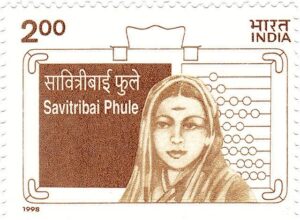
Her legacy lives on in countless ways. The University of Pune was renamed Savitribai Phule Pune University in 2014. India Post released a commemorative stamp in her honour in 1998. Google marked her 186th birth anniversary with a Doodle in 2017. Most recently, the National Institute of Public Cooperation and Child Development was renamed the Savitribai Phule National Institute of Women and Child Development.
Relevance for Today
As we observe Savitribai Phule Jayanti on January 3rd, Savitribai Phule’s message resonates powerfully in contemporary India. Her life reminds us that education is not merely about literacy—it’s about dignity, agency, and the power to transform society. She showed that one person’s courage, when combined with unwavering conviction, can challenge centuries of injustice.
In a world still grappling with gender inequality, caste discrimination, and unequal access to education, Savitribai Phule’s work isn’t history—it’s a blueprint for ongoing action. Her story calls each of us to question inherited prejudices, stand up for the marginalised, and recognise that true progress comes only when we lift everyone together.
Savitribai Phule didn’t just teach children to read and write. She taught an entire nation to imagine a more just and equal society—and then dared to build it, one school, one student, one defiant step at a time.
Completing Savitribai’s Mission: Every Girl in School
On this Savitribai Phule Jayanti, the best way to honour her legacy is to complete the work she began. While we have made progress, millions of girls across India still face the same barriers Savitribai fought against—poverty keeping them from classrooms, discrimination denying them opportunities, and social norms limiting their dreams. But here’s the powerful truth: we can change this. Each one of us has the power to ensure that Savitribai’s vision becomes reality for every single girl in India. The Every Girl in School mission on give.do is working to break down these barriers. This initiative supports organisations working tirelessly on the ground. Pledge to make a small donation every month.

Give exists to alleviate poverty by enabling the world to give. Established in 2000, Give, together with its partners, is the largest and most trusted giving platform in India. Give enables individuals and organizations to raise and donate funds conveniently to any cause they care about, with offerings including crowdfunding, corporate giving, cause marketing, and philanthropy consulting. Give’s community of 2.6M+ donors supports 3,000+ verified nonprofits, serving 15M+ people across the country.
Discover more from
Subscribe to get the latest posts sent to your email.