
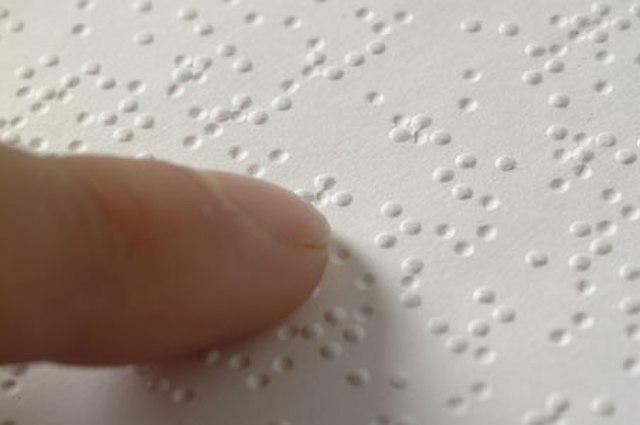
EVERY year on January 4th, the world pauses to recognise World Braille Day. On this day, we honour Louis Braille, the 19th-century French inventor of the Braille system. Through his innovation, Braille continues to unlock opportunities for millions of blind and visually impaired people worldwide.
More than dots: A gateway to equal rights
Braille is far more than a reading method. At its core, it is a tactile system using six raised dots. Through different combinations, these dots represent letters, numbers, and complex symbols. Importantly, the system also supports musical, mathematical, and scientific notation. Beyond technique, Braille represents independence, education, and dignity. Ultimately, it affirms the fundamental right to access information.

For nearly one billion people living with disabilities worldwide, Braille plays a vital role. In particular, it enables access to education, employment, and civic participation. As recognised under the Convention on the Rights of Persons with Disabilities, Braille supports freedom of expression. More broadly, it strengthens social inclusion and equal participation.
COVID’s revealing lens
The COVID-19 pandemic exposed deep inequalities faced by persons with disabilities. During lockdowns, visually impaired individuals faced severe challenges to independence. At the same time, isolation intensified for those who rely on touch. As a result, everyday navigation and communication became far more difficult.
The crisis revealed a stark truth. When information lacks accessibility, vulnerable populations face greater risk. For many, health guidelines were unavailable in Braille or audio formats. Consequently, blind individuals struggled to access life-saving safety information. In effect, exclusion became a public-health threat.
This experience highlighted an urgent need. Specifically, all essential information must exist in accessible formats. At the same time, societies must accelerate digital accessibility efforts. Only then can true digital inclusion become a reality.
Breaking down barriers
Even in ordinary times, persons with disabilities face serious obstacles. For example, they access healthcare, education, and employment at lower rates. Additionally, they experience higher levels of poverty and violence. Too often, neglect and abuse push them to society’s margins. During crises, these challenges multiply rapidly.
World Braille Day, officially recognised since 2019, addresses these realities. Importantly, it highlights Braille’s role in advancing human rights. Above all, it reinforces equality for blind and partially sighted people.
NGOs making a difference
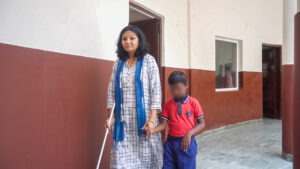
Across India, several NGOs actively support blind and visually impaired communities. Through their work, they promote provide shelter and care to blind girls and boys. They help them with Braille literacy, other forms of access, and advocacy. Through sustained efforts, they deliver Braille education and assistive technology. At the policy level, they advocate strongly for accessibility rights.
You can support these NGOs by donating to them generously. Regional and local NGOs also play vital roles. Within communities, they provide Braille training and educational support. In parallel, they produce accessible materials and improve public spaces. Together, they ensure inclusion at the grassroots level.
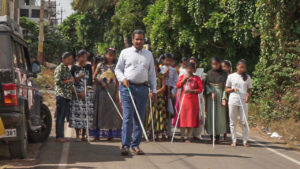
As a result, blind individuals gain equal access. They can read the same books and periodicals. They can access the same information. Most importantly, they can participate fully in education and society.
The impact of these NGOs depends on community support. Fortunately, there are many meaningful ways to contribute. You can volunteer your time. For instance, help transcribe materials into Braille or record audiobooks. You can donate financially. In doing so, you fund Braille production and assistive technologies.
You can advocate locally. By speaking up, you promote accessibility in workplaces and schools. You can spread awareness. Through social media, you amplify Braille literacy issues. You can support inclusive policies. By encouraging institutions, you help normalise accessibility standards.
Looking forward
As we observe World Braille Day this January 4th, we must remember one truth. Accessibility is not a luxury. It is a fundamental human right. Every person deserves access to information and education. Equally, everyone deserves full participation in society.
The six dots of Braille carry powerful meaning. They symbolise dignity, independence, and possibility. They remind us that inclusive design benefits everyone. In the long run, accessibility creates a more equitable world.
This World Braille Day, take a moment to act. Learn about Braille, support these organisations, and commit to inclusion. Because ultimately, when we remove barriers for some, we create opportunity for all.

Give exists to alleviate poverty by enabling the world to give. Established in 2000, Give, together with its partners, is the largest and most trusted giving platform in India. Give enables individuals and organizations to raise and donate funds conveniently to any cause they care about, with offerings including crowdfunding, corporate giving, cause marketing, and philanthropy consulting. Give’s community of 2.6M+ donors supports 3,000+ verified nonprofits, serving 15M+ people across the country.
Discover more from
Subscribe to get the latest posts sent to your email.