
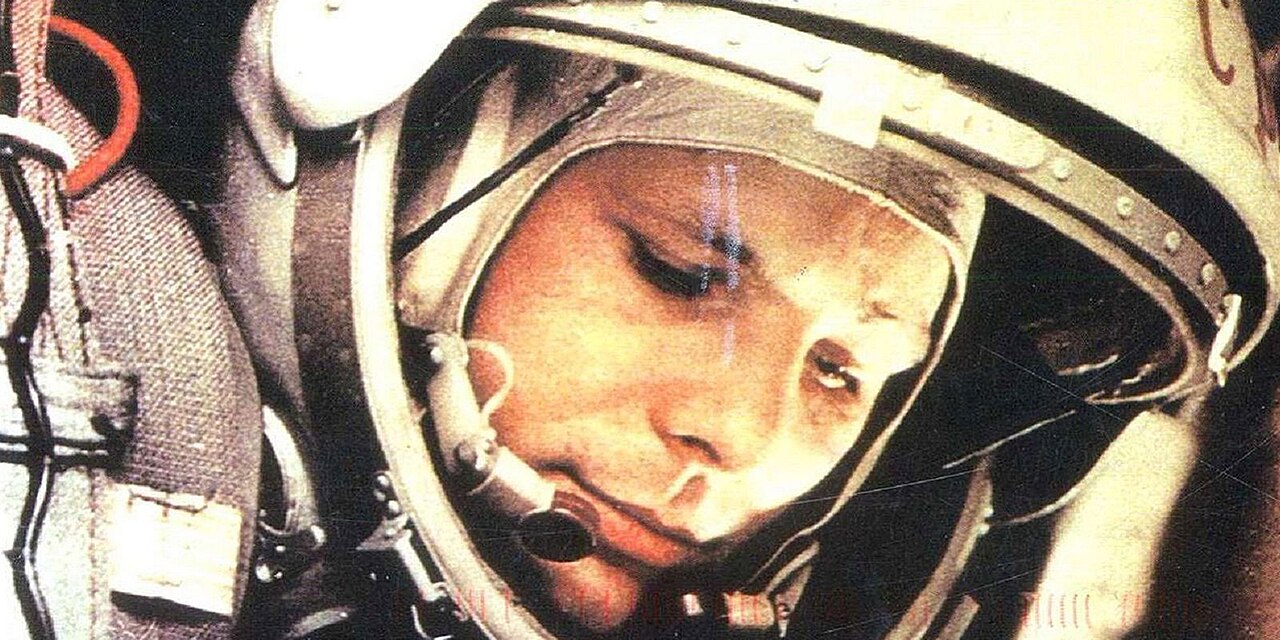
ON April 12, 1961, a 27-year-old Soviet pilot named Yuri Gagarin strapped himself into a small spherical capsule called Vostok 1, hurtled through the atmosphere at 27,400 kilometres per hour, and became the first human being to see Earth from space. His flight lasted 108 minutes. What it launched has lasted over six decades, and counting. Every year on April 12, the world observes the International Day of Human Space Flight. This a United Nations-designated day that celebrates this extraordinary milestone and reaffirms humanity’s commitment to exploring outer space for peaceful purposes (UN Resolution A/RES/65/271). It is a day to look up, reflect, and remember that when humanity dares to dream beyond its limits, extraordinary things happen.
A Giant Leap — and Then Many More
The International Day of Human Space Flight is rooted in one of history’s most defining moments. But Gagarin’s flight was only the beginning. Two years later, on June 16, 1963, Valentina Tereshkova became the first woman to orbit the Earth (NASA). On July 20, 1969, Neil Armstrong took one small step on the Moon — and one giant leap for all of us (NASA). In 1975, the Apollo-Soyuz mission became the first international human mission in space, a powerful symbol of cooperation over competition (NASA).
Since then, humans have maintained a permanent presence in space aboard the International Space Station for over two decades — a multinational endeavour that represents the very best of what countries can achieve when they work together (ISS National Lab).
The Latest Chapter: Artemis and the Return to the Moon
Just yesterday, the world watched as four crew members of NASA’s Artemis II moon mission splashed down safely, marking another landmark moment in human space exploration (NASA Artemis). The Artemis programme represents humanity’s return to the Moon — and this time, with ambitions that stretch far beyond it, towards Mars and the deeper cosmos.

It is precisely this spirit of relentless exploration that the International Day of Human Space Flight seeks to honour — the idea that no frontier is too far, no dream too large, and no challenge too great for the human mind and will.
India Reaches for the Stars
The International Day of Human Space Flight is also a moment to celebrate India’s remarkable and accelerating journey into space. The Indian Space Research Organisation (ISRO) has quietly become one of the most accomplished space agencies in the world — and not so quietly anymore.
In 2023, India made history when Chandrayaan-3 became the first mission to soft-land near the lunar south pole — a feat no other nation had achieved (ISRO). The Pragyan rover’s images of the Moon’s uncharted southern terrain captured imaginations across the country and the world. In the same year, India’s Aditya-L1 mission successfully launched to study the Sun, placing India among a handful of nations with a dedicated solar observatory in space (ISRO).
India’s Mars Orbiter Mission — Mangalyaan — remains one of the most cost-effective interplanetary missions ever undertaken, reaching Mars on its very first attempt in 2014 (ISRO). And with the Gaganyaan mission on the horizon, India is preparing to send its own astronauts to space — a dream that will inspire a billion people and counting (ISRO Gaganyaan).
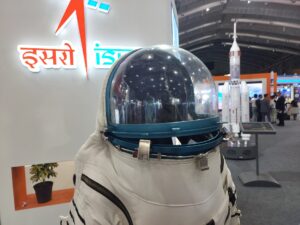
On this International Day of Human Space Flight, India’s story is a reminder that the stars belong to everyone — not just to nations with the deepest pockets, but to those with the deepest resolve.
The Voyager Record and Our Shared Humanity
In 1977, NASA launched the Voyager spacecraft into the cosmos carrying a Golden Record — a collection of sounds, music, and greetings from Earth, intended for any civilisation that might one day find it (NASA Voyager). The United Nations played a role in its creation, and the first words on the record are those of the then-UN Secretary-General, expressing hope for peace and friendship.
As Simonetta Di Pippo, Director of the UN Office for Outer Space Affairs, has said: “The undertaking of the Voyager project reminds us of who we are, where we came from, and that we should treat each other with care.” (UNOOSA)
That is perhaps the deepest truth the International Day of Human Space Flight asks us to sit with — that the universe is vast, but we are all in this together.
From Outer Space to the Classroom: Igniting Young Minds
Here is a question worth asking on this International Day of Human Space Flight: where will the next Gagarin come from? Where is the child who will design India’s first Mars mission, or build a telescope that sees the edge of the universe?
The honest answer is — we don’t know. And that is precisely the problem.
Right now, in the villages and urban slums of India, there are children of extraordinary potential who will never get the chance to look through a telescope, read a science book, or even stay in school long enough to discover what they are capable of. Not because they lack ability — but because they lack access.
This is where education-focused NGOs are doing work that is, in its own way, as important as anything happening in space. Organisations across India are reaching children in the most underserved communities — providing quality education, STEM exposure, mentorship, and the simple but transformative gift of being told: your dreams are valid.
A child in rural Rajasthan who learns about Kalpana Chawla (NASA). A girl in a Mumbai slum who is given her first science kit. A boy in a remote tribal village who is taught to read and, through reading, discovers a universe of possibility. These are not small acts. These are the moments that change the trajectory of a life — and perhaps, one day, the trajectory of a spacecraft.
You Can Help Light That Spark
If the International Day of Human Space Flight means anything, it is this: human potential, when nurtured, knows no bounds. Every astronaut was once a child who was allowed to dream. Every scientist was once a student who was given a chance.
You can be part of that story. On Give.do, India’s most trusted giving platform, you can discover hundreds of verified NGOs working in education for underprivileged children across India — from early childhood learning to STEM education to scholarships for girls. Every donation, however small, is an investment in a mind that might one day look up at the stars and find a way to reach them.
This April 12, as the world marks the International Day of Human Space Flight, look up — and then look around. The next great explorer might be waiting for someone like you to believe in them first.
Discover education NGOs on Give.do and support a child’s dream today.

Give exists to alleviate poverty by enabling the world to give. Established in 2000, Give, together with its partners, is the largest and most trusted giving platform in India. Give enables individuals and organizations to raise and donate funds conveniently to any cause they care about, with offerings including crowdfunding, corporate giving, cause marketing, and philanthropy consulting. Give’s community of 2.6M+ donors supports 3,000+ verified nonprofits, serving 15M+ people across the country.