
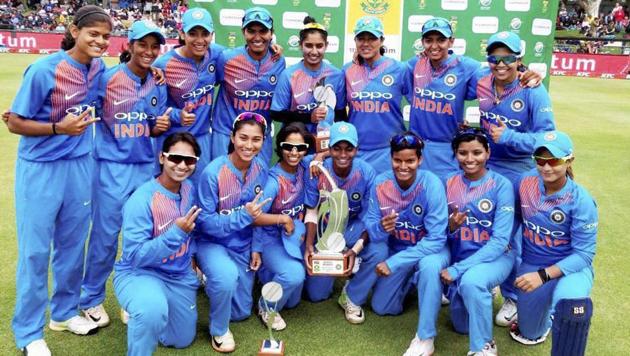
EVERY once in a while, sport gifts us stories so powerful they leave a mark, inspire us and remind us what resilience and opportunities can achieve. India’s sporting landscape is filled with tales of young athletes who braved adversity to scale great heights in their fields. Yet, what is often overlooked is how gender discrimination and intersectional barriers make this climb twice as difficult for women. Against these odds, we find extraordinary stories like that of Saika Ishaque and Simran Shaikh, whose journeys show how women in sports can rise from extreme hardships to national stardom.
Saika Ishaque, born and raised in the slums of Kolkata, lost her father at the tender age of 12. Financial struggles weighed heavily on her family, but her spirit never wavered. Battling with limited resources and few opportunities, Saika persevered through the Bengal domestic circuit before making her dream debut in 2023 for India’s women’s cricket team.
Far across the country, in the dense sprawl of Dharavi, Mumbai, Simran Shaikh carved her path. Playing cricket in narrow lanes with boys much older than her, Simran fought stereotypes, financial challenges, and a lack of facilities. Her father worked as an electrician and her mother managed the household, but it was Simran’s relentless grit that carried her from Dharavi’s cramped alleys to the spotlight of the Women’s Premier League (WPL).
And these are only two stories among many that we are talking about since the ICC Women’s Cricket World Cup 2025 gets underway. But, from Mary Kom’s punches in the boxing ring, Mirabai Chanu’s weightlifting glory, Deepika Kumari’s archery precision, to the Phogat sisters’ wrestling accolades — each narrative is a testament to perseverance. These journeys are not just personal victories; they embody what becomes possible when women in sports are given platforms, sponsorships, and societal support. These women did not rise alone; they carried with them entire communities, inspiring a generation of young girls to dream and to believe in their own strength and ambition.
Why support matters: Sponsorships & support are game-changers
The road for women athletes is often steeper than for men, especially when they come from underprivileged settings. Sponsorships, mentorship, and NGO partnerships help level it:
Financial access: For many women, sponsoring travel, gear, coaching, or tournament fees is out of reach.
Visibility: Sponsors elevate these athletes’ narratives, helping them become public figures with media presence.
Career sustainability: A sports career is short. Funding ensures athletes aren’t sidelined by economic pressures.
Community ripple: Successful women become role models, especially to younger girls in their communities.
Without these supports, the paths of Saika and Simran would have been far steeper, maybe even blocked.
NGO Spotlights: Deep Dive into five organisations powering change
NGOs play a pivotal role in reshaping the future of women in sports in India. By creating safe spaces, offering structured training, and challenging long-held gender stereotypes, they ensure that girls from marginalized and underprivileged communities have access to the opportunities they deserve. Organizations like Naz Foundation, OSCAR Foundation, SSM’s Sagroli Sunrise Project, Victory Sports Foundation, and Khel Khel Mein Foundation are not just teaching girls how to play — they are building leaders, boosting confidence, and redefining what is possible for women in sports across India. Their initiatives bridge the gap between raw talent and professional opportunity, ensuring that the next generation of athletes is not held back by systemic barriers but instead propelled forward by community support and vision.
Naz Foundation (India) Trust — Young People’s Initiative and sport-for-development
Naz Foundation’s Young People’s Initiative (YPI) is a sport-for-development program that uses netball and structured play to empower adolescent girls. Beyond physical training, the initiative integrates life-skills workshops, health awareness, and leadership development. Alumni often become peer educators and coaches, creating a cycle of empowerment. By blending sport with education and mentoring, Naz helps girls overcome social barriers, stay in school, and gain confidence to challenge gender stereotypes in their communities.
OSCAR Foundation — Football and the ‘Kick Like a Girl’ model
The OSCAR Foundation uses football to inspire confidence and leadership in girls from low-income backgrounds. Its flagship “Kick Like a Girl” program combines training with a life-skills curriculum, addressing topics like self-confidence, health, and communication. A key strength is developing young women as certified coaches and leaders, who then mentor younger players. With its “No School, No Football” rule, OSCAR ensures education stays central. This dual focus empowers girls both on and off the field, changing perceptions within families and communities.
SSM’s Sagroli Sunrise Project — Rural talent and long-term pathways
Sagroli Sunrise identifies and nurtures sporting talent in rural Maharashtra, with a focus on athletics and endurance sports. Girls from agrarian and marginalized families receive coaching, nutrition support, and opportunities to compete in district and national events. The program also works with parents and communities to overcome cultural barriers that often push girls out of sports. With long-term mentorship and structured training, Sagroli helps rural girls see sports not as a luxury, but as a legitimate path to opportunity and recognition.
Victory Sports Foundation — Local hubs and inclusive programs
Victory Sports Foundation (VSF) runs its “Sports 4 All” initiative, creating community play hubs and offering girls access to athletics, boxing, and football. By training local coaches in gender sensitivity and safeguarding, VSF ensures that sports environments are safe and inclusive. Inter-hub leagues and tournaments provide repeated exposure to competitive play. Beyond sport, VSF organizes health camps and school partnerships, embedding play in education. Their model normalizes girls’ participation in sports and builds community support for their athletic journeys.
Khel Khel Mein Foundation — School sports ecosystems
Khel Khel Mein Foundation (KKM) brings structured sports directly into schools, making play part of education. For girls, it addresses barriers by scheduling accessible practice times, ensuring safe facilities, and encouraging equal participation. Teachers are trained to deliver sports curricula, turning schools into sustainable hubs of activity. KKM measures outcomes in attendance, engagement, and socio-emotional development, proving that structured sports can transform school environments. By embedding play at the foundational level, KKM nurtures a generation of girls for whom sport is a right, not a privilege.
Bridge to the future: What must be done next
The momentum around women’s sports is real, the Women’s Cricket World Cup 2025 revealed the hunger for it. But systemic change requires deliberate strategy:
- Equal investment at grassroots — not just in marquee events
- Sustained media coverage — beyond just major tournaments
- Safe infrastructure & mentorship — spaces where girls feel secure and supported
- Policy accountability — institutions need measurable gender equity goals
- Cross-sector partnerships — sponsors, NGOs, government, media working together
If this ecosystem thrives, the next Saika or Simran won’t be an exception — she’ll be the expectation. The arcs of Saika Ishaque and Simran Shaikh reveal an essential truth: women in sports are rewriting India’s story. With sponsorships, NGO support, and public recognition, barriers crumble and talent finds room to shine. Let us not just celebrate these athletes today. Let us build systems that ensure the next generation of women athletes has smoother, stronger pathways to success.
FAQs on women in sports
Q1: Why do stories like Saika’s and Simran’s matter?
They show the power of resilience, inspire millions, and spotlight how support systems can radically shift lives.
Q2: What role do sponsorships play?
They offer financial security, boost visibility, and sustain athletes’ focus on performance.
Q3: Which NGOs support women athletes?
Among others: Naz Foundation, OSCAR Foundation, SSM’s Sagroli Sunrise, Victory Sports Foundation, and Khel Khel Mein Foundation.
Q4: What hurdles do women in sports face?
Gaps in infrastructure, entrenched cultural bias, limited funding, and safety or logistical concerns.
Q5: How can communities help?
By promoting girls in sports, creating safe spaces, and cheering their achievements as much as boys’.
Q6: What is media’s role?
Media shapes public perception, influences sponsors, and can normalize women’s athletic excellence.
Choosing to tread the proverbial road less travelled, Ramon embarked upon a career in journalism and spent over 8 years working for various media organisations. A deeper calling to create a sustainable impact in the lives of the less fortunate compelled him to join the social sector. Ramon is a minimalist at heart and an explorer in spirit.
Discover more from
Subscribe to get the latest posts sent to your email.