
Capacity building of first responders: Rescue and rehabilitation of commonly trafficked animals

Story
Over the past few years, India has witnessed the seizures of thousands of illegally traded birds, mammals, and reptiles, including many endangered animals. In many cases, live animals are being traded for the pet or meat markets, and law enforcement agencies are placed in a situation where they are required to handle and care for animals that are in dire need of medical care. Coming from unknown sources, transported in unhygienic conditions, and facing immense stress, these animals pose a grave risk of infectious disease outbreaks through the transmission to humans. The law enforcement officers, such as forest officers and customs officers, who seize these animals at remote border posts and airports often find themselves ill-equipped and untrained to handle these situations. Responsible for these vulnerable animals, their personal safety, and the health of everyone around them, these officers face this challenge regularly and require attention and support through capacity building and equipment.
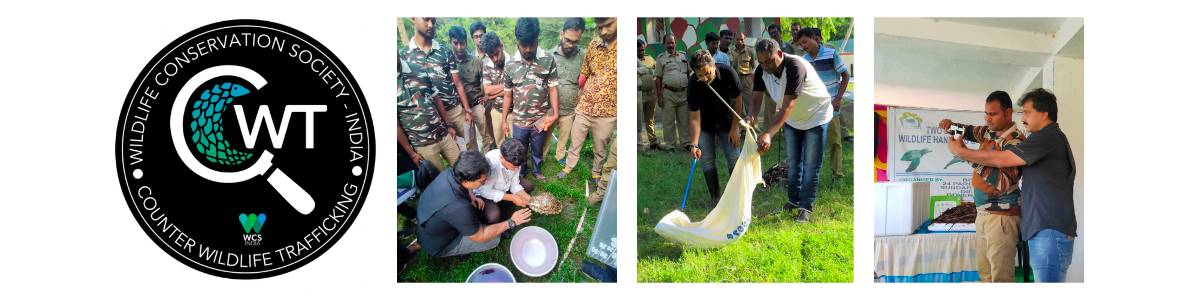
Recognizing the grave threat faced by both humans and wildlife in these situations, the Counter Wildlife Trafficking Programme of WCS India has been conducting workshops on the handling of commonly seized wildlife in the state of West Bengal, which is a hotspot of illegal wildlife trade across international borders. Through these workshops, we have worked to build the capacity of frontline staff, who are the first responders in these situations, to handle seized animals in a manner that reduces the risk of injury and disease to animals and humans. We have been developing extensive guidelines for the handling of various animals, including first aid in case of snakebites. Using a hands-on approach, we demonstrate the correct use of safety equipment and the steps necessary to provide the animal with a stress-free environment. We are constantly receiving requests for such training and support with relevant equipment, and we recognize the need to expand this project to other parts of the country, which have similar hotspots of illegal wildlife trade, and to develop new safety measures and new protocols to deal with the growing breadth of species that are seized.
Over the past 10 months, we have trained over 400 frontline staff in West Bengal in the rescue and rehabilitation of commonly trafficked animals. We have received an overwhelming response from these trainees, whose feedback has confirmed that the training has greatly improved their ability to provide primary care for seized animals while protecting themselves from harm. By expanding our project we will be able to provide the same training to many more officers who are likely to be first responders to live animal seizures. This will ensure that (i) many endangered animals that are rescued from the illegal trade in wildlife have a better chance of surviving, (ii) the trained frontline staff are not subjected to undue risk of injury from handling animals, and (iii) the risk of spread of zoonotic diseases that transfer from wildlife to humans is reduced.
For more information on our work, please also visit our website and watch 'Surviving the Odds – Combating India’s Illegal Wildlife Trade'
Organisers
Wildlife Conservation Society - India
Beneficiary Charity

Wildlife Conservation Society - India
Organiser
Start a Supporting Fundraiser
Magnify your impact by starting your own fundraiser. All funds raised by you will support the cause and help reach the goal faster.
0 raised of 5L
View All Donations
India's most trusted online donation platform

Easy
Donate quickly and seamlessly

Impactful
Champion causes close to your heart and change lives

Credible
Support 3,000+ certified Indian nonprofits
FAQs
Everything you need to know about the product and billing. Can’t find the answer you’re looking for? Please chat with our friendly team.
How does give.do Fundraisers work?
Is my donation on Give.do Fundraiser secure?
Will my entire donation reach my selected NGO?
What payment methods are accepted on Give.do?
In what currencies does Give.do accept the donation?
What causes can you donate to?