
COVID19 – NUTRITION AND RELEVANT LIVELIHOODS RURAL ELDERLY COLLECTIVES
Campaign by HelpAge India
Donate Via
Google Pay, Paytm and others
Credit & Debit Cards
Internet Banking & Transfer
Story
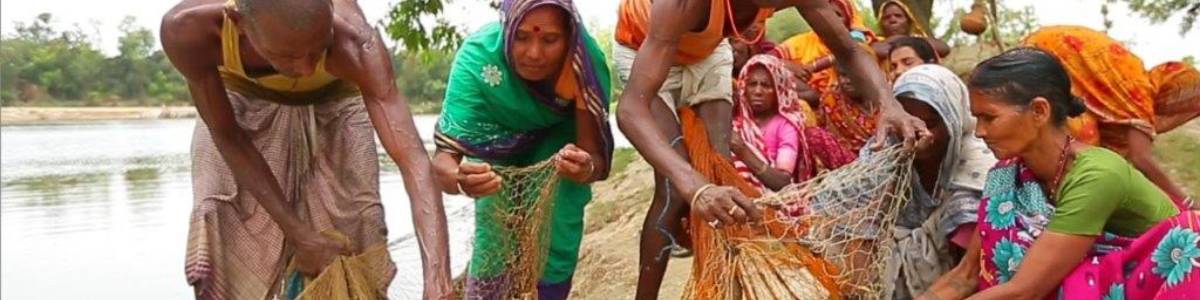
The elderly are most vulnerable to this COVID19 Virus which remain asymptomatic till nearly 14 days, new research puts the quarantine period at 28 days. In Social-Health-Economic impoverishment levels coupled with the occurrence of NCDs, it is assumed that every person over the age of 55 years, and especially women would be most vulnerable. As a precaution, all elderly over 60 years have been advised to stay at Home and not venture out unless it was a case of Medical emergency. Given the 66 day Lockdown the elderly, especially those in the villages face an unenviable future despite the pronouncements of aid by the Governments, even as their children find their way “home”, starved and jobless. This scenario for the rural elderly has only become pronounced and precarious with no inward remittances, no incomes from livelihoods, inability to procure subsidized medicines for their health needs, a depletion in savings and in some cases, forced to contract debt to support the returning migrant children. In a Post- COVID Impact Survey conducted by HelpAge India, it is established that 65% elder respondents stated that COVID 19 lockdown impacted their livelihood and 71% reported loss of livelihood of the main breadwinner.
HelpAge India works directly with nearly 80K rural elderly poor having institutionalized the concept of Collectives of Rural Elderly Poor around micro- Credit and Livelihoods. These Collectives the base of which are the Elders Self Help Groups or ESHGs have been federated at the Primary (Village/Habitation) and higher levels. HelpAge India would confer with the elderly and the Pusa Agriculture University to identify the most relevant and quick turnaround varieties of Vegetables, procure Certified Improved Variety Seeds directly from the National Seeds Corporation or through the Krishi Vignan Kendra's and distribute to the elderly through the Rural Elderly Collectives (Elders Self Help Groups).
Two Separate Kits would be made, say Kit A and Kit B, with different varieties of vegetable seeds, enough for planting in ¼ acre. Both Kits would invariably have seeds for green leafy vegetables (such as Amaranthus, Mustard, Spinach and similar) as well as other region/season appropriate vegetables.
Two Non-competing models have been identified to ensure that there is scope for mutual exchange, enough market and ensure no internal competition and therefore lower market prices when it came to sale of surplus.
HelpAge India has a direct continued presence with 58619 elderly in 4733 Elderly Elders Self Help Groups, practicing on-farm livelihoods in Bihar, Chhattisgarh, Himachal Pradesh, Madhya Pradesh, Maharashtra, Odisha, Puduchery, Rajasthan, Tamil Nadu, Telangana and West Bengal.
At Four Kits per Collective the Fund Absorption Capacity translates to INR 94.65 lakhs for 18932 Direct Beneficiaries (+75000 indirect beneficiaries) and is Scalable to INR 1.60 Crores for 29310 Direct Beneficiaries (+110000 indirect beneficiaries) if providing to alternate members.
Organisers

HelpAge India
Beneficiary Charity

Bijay Kumar Mishra
Organiser
Start a Supporting Fundraiser
Magnify your impact by starting your own fundraiser. All funds raised by you will support the cause and help reach the goal faster.
View All Donations
India's most trusted online donation platform

Easy
Donate quickly and seamlessly

Impactful
Champion causes close to your heart and change lives

Credible
Support 3,000+ certified Indian nonprofits
FAQs
Everything you need to know about the product and billing. Can’t find the answer you’re looking for? Please chat with our friendly team.
How does give.do Fundraisers work?
Is my donation on Give.do Fundraiser secure?
Will my entire donation reach my selected NGO?
What payment methods are accepted on Give.do?
In what currencies does Give.do accept the donation?
What causes can you donate to?