Special Schools & Rehabilitation Centers for Children with Intellectual and Hearing Disabilities
Campaign by Asha Ka Jharna
Donate Via
Google Pay, Paytm and others
Credit & Debit Cards
Internet Banking & Transfer
Story
Rajasthan has a current population of 75 million, with 55 million of the people living in rural areas. 70% of the population is dependent on agriculture which itself is a limiting factor in our project demographics where annual rainfall is less than half of the national average. National Family Health Survey - 4 (2015-16) presents a grim picture of children and women health indicators in Rajasthan. Child sex ratio (0-6 years) is alarmingly low at 887:1000. 39% of the children are stunted and 23% of children are wasted. 47% women of reproductive age are anemic, exclusive breastfeeding for six months is 58%; low birth weight is 23%. Only 17 % of women consume iron-folic acid and only 28% of the infants are breastfed within one hour of birth. This throws up a huge challenge to work in this field due to the ignorance, prejudice, and biases of the community about these children. In rural areas like our project demographics, the incidences of disability are more due to various reasons like unsafe deliveries, lack of medical support systems, the social issues like congenial marriages, poor level of awareness, etc. The NFHS 2015-16 report, based on Rajasthan statewide sample size estimates that there are 2188 Persons with Disabilities (per 100,000 people) (Rural: 2350 & Urban: 1697). Reported average figures in Jhunjhunu and Sikar districts translate into 33,445 and 41,900 persons with disability, respectively. With 44% of these being children below 18 (15% in 0-6 years age group), we have a challenging task cut for reaching out to more than 33,000 children in these two districts.
‘Asha Ka Jharna’ undertook the responsibility to provide for a better future, just and equitable space and dignified life to the special needs children in Shekhawati region of semi-arid rural north-western Rajasthan. There were no rehabilitation services present in this area. Ours was the pioneer intervention here and still remains one, so providing comprehensive services to CWSNs and their families in a holistic manner with optimum resource utilization.
In 1998, when we started working on this issue, we had no support from the inhabitants of the area. Our team encountered many difficulties in the initial phase at that time. Being a conservative society, people were closeted in their homes. They did not open up easily and treated us with suspicion. Awareness about disability was pathetic. Special children were the worst sufferers. Parents either concealed their special wards or treated them very badly. Some of them were even chained and were living lives worse than animals. People used to think any intervention as futile. Maximum they could visit local quakes. These children were considered to be the "Curse of the God and sin of their past life" and were deprived of their basic right to education and other human rights. It was a daunting task to convince this community about disability – its various aspects and role of special school/rehabilitation center.
Through our concerted efforts and dedicated staff, we demonstrated tangible improvements with self-help skills, social and communication skills, academic and cognitive skills, physical and mental development in the children thus increasing AKJ acceptance among the local community. We have been working all these years enabling children with special needs to attain independence by accessing quality rehabilitation services thereby alleviating the social stigma attached.
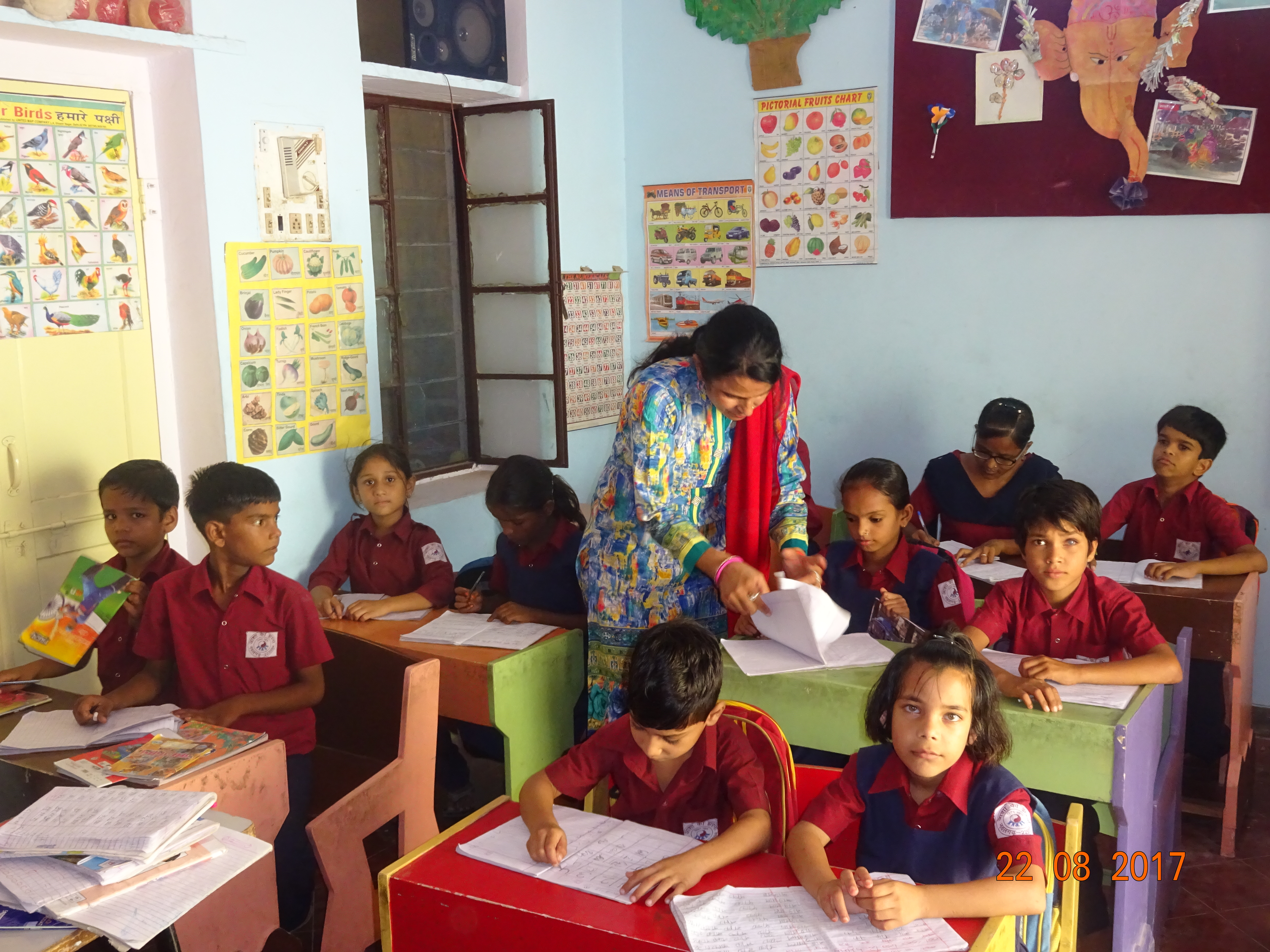
Since 1998 , our three special schools for intellectually disabled (including cerebral palsy, Down syndrome, autism and other developmental disabilities) as well as hearing and speech impaired children have been providing services in the domains of special education, therapeutic, vocational, guidance and counseling to more than 200 special children and their families on a regular basis. Training, capacity building in the field of rehabilitation and outreach services are also being undertaken.
Our key objectives are:
-To educate and train the intellectually disabled and hearing-impaired children in a holistic manner
-To provide preventive, intervention and rehabilitative services to children with intellectual and developmental disabilities and/or hearing impairment
-To conduct training and capacity building in the field of rehabilitation to make a pool of better-equipped professionals, parents, caregivers
-To provide for outreach and home-based services.
-To motivate and sensitize all stakeholders for the special children’s training
-To ensure, advocate and promote equal rights of the special needs children
-To strive for mainstreaming of children in the regular education system
To promote independent living within community settings for youth with disabilities
Methodology:
What AKJ has been attempting all these 22 years is based on a well thought of established sub-system concerning child at the focal center. We work closely with different entities in the child environment; be it family, non-disabled children, regular teachers, mass media, professionals across different spectrum, politico-social leadership and finally ideological & belief level interventions Our Rehabilitation Strategy CREAM (Catch Them Young; Rights Based; Engage; Advocate & Maximize Potential) is concentrated around this subsystem addressing each component consciously. With our team’s consistent endurance, we have been able to make a measurable impact on more than one hundred thousand lives all these years.
Vision: A Society with Just & Equal Opportunities for All
Mission: To serve less privileged community such as children with special needs, women in distress, destitute, old persons etc. with the aim to make them achieve a rightful place in their settings with the active participation of all stakeholders.
Belief & Values: Every child has the inherent right to life, survival, and development, including the right to the highest attainable standard of health to facilities for the treatment of illness, the right to education and the right to benefit from social security. Every child has a right to a standard of living adequate for the child's physical, mental, spiritual, moral and social development.
Guiding principles are Enlightenment, Education, Employment and Empowerment leading to Inclusion.
• Regular ongoing special education, training, and therapeutic services to around 200 special need children and their families every year since 1997 thus more than 4000 special children have been served by us.
• Accessibility and inclusion made possible to more than 1000 beneficiaries through disability certificates, assistive devices, aids and appliances, polio corrective surgeries.
• Free distribution of high quality behind the ear hearing aids to 625 children across the surrounding region.
• Community counselling services to more than 5000 persons.
• Massive school/college awareness programmes on disability in the Shekhawati area. 40000 school students and teachers covered.
• Formal training courses in association with Indira Gandhi National Open University New Delhi delivered to 360 Govt teachers and 80 parents.
• ‘District Games for Disabled’ conducted in Sikar under the scheme of Ministry of Sports & Youth Affairs (232 special needs athletes participated)
• ‘District Games for Disabled’ conducted at Jhunjhunu under the scheme of Deptt. of Social Justice, Govt of Raj (260 Special Athletes participated)
• ‘Regional Parents Meet’ by NIMH & PARIVAAR organized at Jhunjhunu. (112 Parents from Rajasthan and Gujarat participated)
• ‘Regional Parents Meets’ facilitated by us completely at Jaipur, Ajmer, Udaipur, and Sawai Madhopur as well as National Parents Meet and Self Advocates National Convention at Udaipur (More than 1000 parents & 300 self-advocates across the country benefitted)
• Community sensitization events at different places (> 20000 targeted)
• Special needs children taken to Special Olympics, Abylampics, excursions, adventure expeditions, fairs etc. to various places all over India. Around 1000 children have explored Darjeeling, Dalhousie, Bhubaneshwar, Chandigarh , Amritsar, Delhi, Jaipur and many towns across the country.
• 260 special needs children have passed school board levels A, B and C (equivalent to class 8th) from National Institute of Open Schooling so far.
• Our children have participated and won laurels in Special Olympics & Abylampics National Level Events.
Updates
Currently there are no updates available
Project Updates
5 Jun, 2021
COVID 19 Resilience Strategy / Sustainable Solutions for Persons with Disabilities – Educational and Rehabilitation Outreach
Organisers

Asha Ka Jharna
Beneficiary Charity

SUDEEP GOYAL (ASHA KA JHARNA)
Organiser
Start a Supporting Fundraiser
Magnify your impact by starting your own fundraiser. All funds raised by you will support the cause and help reach the goal faster.
View All Donations
India's most trusted online donation platform

Easy
Donate quickly and seamlessly

Impactful
Champion causes close to your heart and change lives

Credible
Support 3,000+ certified Indian nonprofits
FAQs
Everything you need to know about the product and billing. Can’t find the answer you’re looking for? Please chat with our friendly team.
How does give.do Fundraisers work?
Is my donation on Give.do Fundraiser secure?
Will my entire donation reach my selected NGO?
What payment methods are accepted on Give.do?
In what currencies does Give.do accept the donation?
What causes can you donate to?